

Semester VII MDSE-11 Research Methods in Politics
Unit IV · 19 min read · Updated 24 Nov 2026
As per the University of Delhi (DU) BA (Hons) Political Science syllabus
Contents
- 4.1 Writing a Research Proposal
- 4.2 Philosophy and Ethics of Research
- 4.3 Plagiarism
- 4.4 Publication Ethics and Misconduct
- 4.5 Important Questions
- Discuss the structure and importance of a research proposal.
- Discuss the philosophy and ethics of research.
- What is plagiarism? Discuss its forms and the measures to prevent it.
- Discuss publication ethics and the forms of publication misconduct.
- Short Notes
विवेक के बिना विज्ञान आत्मा का विनाश है।
Science without conscience is but the ruin of the soul.
— François Rabelais, Pantagruel (1532)
DOING research involves practical skills as well as theory. A researcher must write a clear research proposal that identifies a gap in the literature, states research questions and hypotheses and explains the methodology. Research must also be guided by philosophy and ethics: respect for the people studied, honesty in handling data and fairness to other scholars. Plagiarism, presenting others’ work as one’s own, and other forms of publication misconduct violate academic integrity. This chapter explains these practical and ethical aspects of research, drawing on Manoranjan Mohanty’s guide to preparing a research proposal, P. Chandah on ethics in competitive research and the UGC’s course on Research and Publication Ethics.
4.1 Writing a Research Proposal
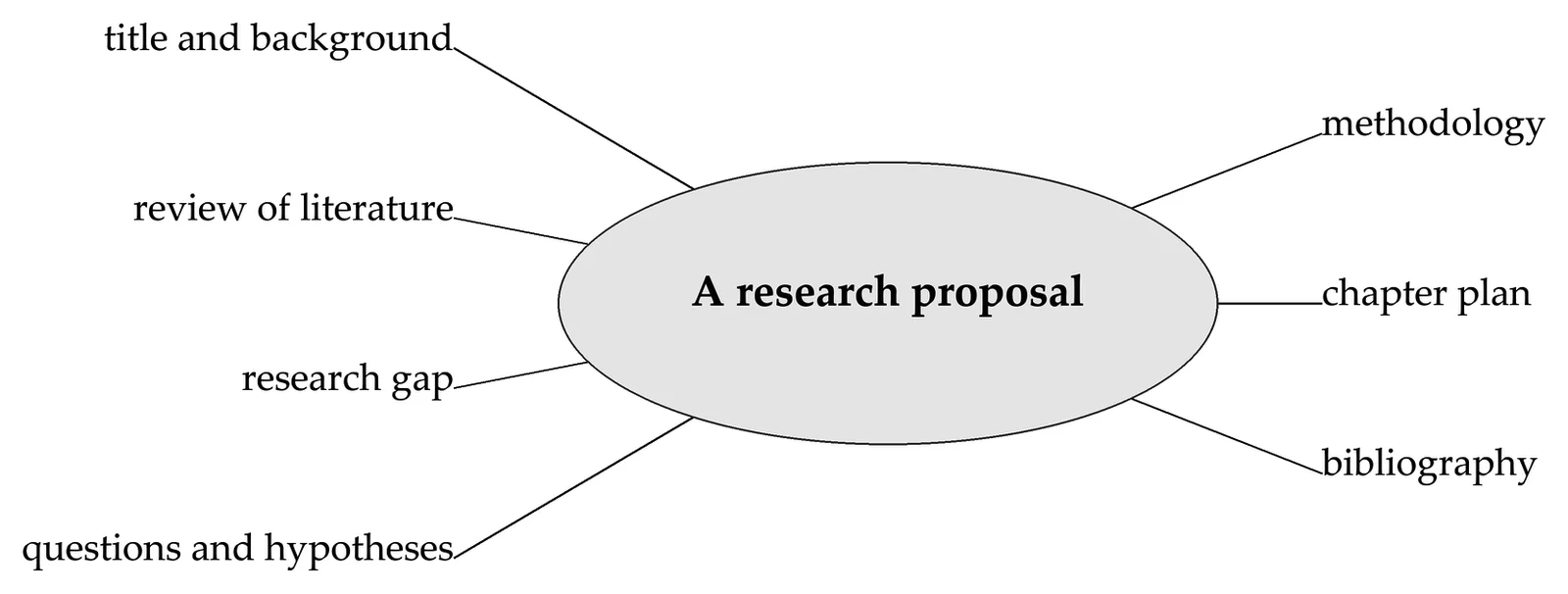
A research proposal is a plan that explains what the researcher intends to study, why it matters and how it will be done. Manoranjan Mohanty’s guide describes its main parts: a title, background and statement of the problem, a review of literature leading to the research gap, research questions and hypotheses, the research methodology, a chapter plan and a bibliography. A good proposal convinces readers that the research is significant, original and feasible.
4.2 Philosophy and Ethics of Research
Research rests on philosophical assumptions about reality (ontology) and knowledge (epistemology), which shape methodology. It must also follow ethical principles: informed consent, confidentiality, avoidance of harm, honesty and fairness. These principles were developed after abuses such as Nazi medical experiments, leading to the Nuremberg Code of 1947 and later guidelines, and they apply with special force to research on vulnerable groups.
4.3 Plagiarism
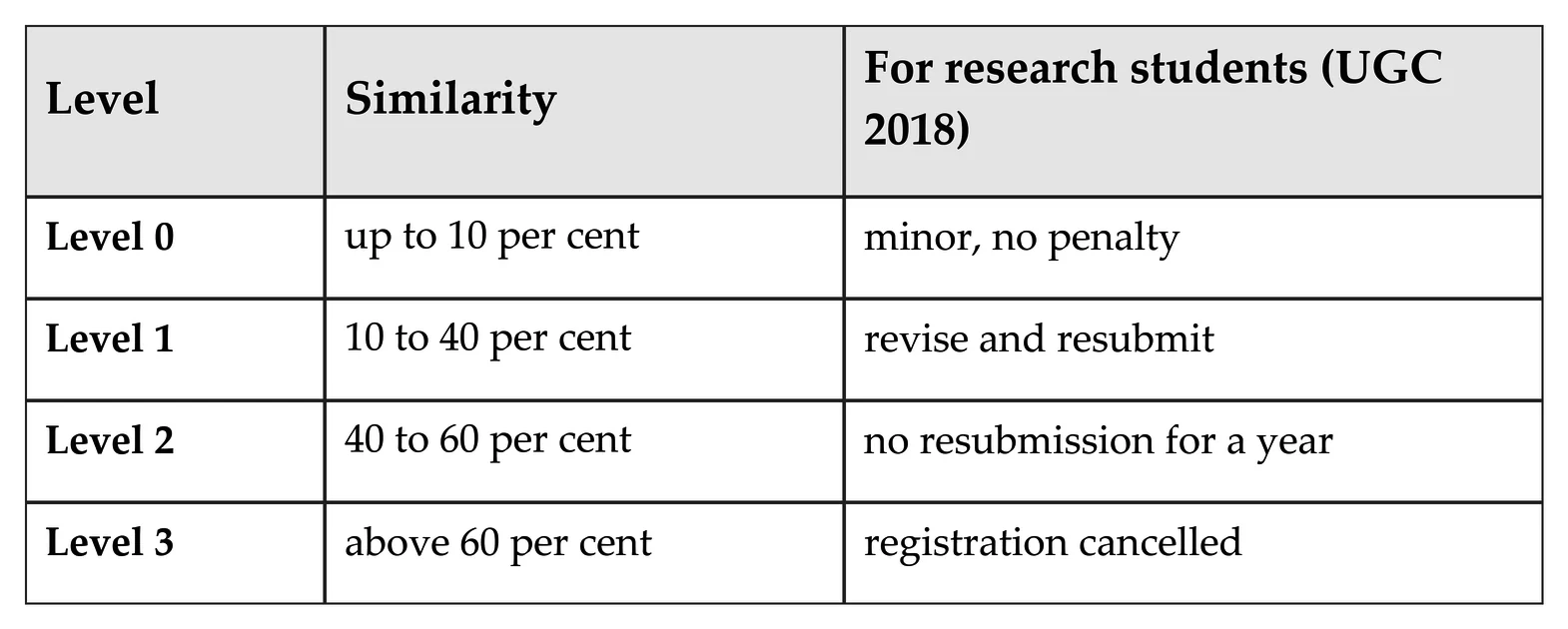
Plagiarism is presenting someone else’s words or ideas as one’s own without acknowledgement. It includes copying text, paraphrasing without citation, reusing one’s own published work without disclosure and submitting work written by others. The UGC’s regulations of 2018 define levels of plagiarism by the percentage of similarity and set penalties, and software is used to detect it.
4.4 Publication Ethics and Misconduct
Publication ethics governs how research is reported and published. Misconduct includes fabrication and falsification of data, plagiarism, improper authorship, duplicate publication and publishing in predatory journals. P. Chandah discusses how researchers can protect their work from being scooped or plagiarised in competitive fields. The UGC’s course on Research and Publication Ethics trains researchers in these standards.

4.5 Important Questions
- Question 1 Discuss the structure and importance of a research proposal.
- Question 2 Discuss the philosophy and ethics of research.
- Question 3 What is plagiarism? Discuss its forms and the measures to prevent it.
- Question 4 Discuss publication ethics and the forms of publication misconduct.
DU asks the same idea in different words. So learn one broad answer for each question below; the same answer works for every question joined by OR.
Important Question 1
Discuss the structure and importance of a research proposal.
OR
How is a research gap identified in a research proposal?
OR
Explain the components of a research proposal with reference to Manoranjan Mohanty.
Model Answer
“Plans are worthless, but planning is everything.”
— Dwight D. Eisenhower (1957)
Introduction. A research proposal is a detailed plan for a research project. It is required for admission to research programmes, for funding and for approval by supervisors and committees. Writing a proposal forces the researcher to think clearly about the problem, the existing literature, the questions to be answered and the methods to be used. Manoranjan Mohanty’s guide to preparing a research proposal sets out its main components.
1. Purpose of a Proposal
A proposal shows that the researcher has identified a significant problem, understands the existing literature, has clear questions and a feasible plan, and can complete the research within the available time and resources.
2. Mohanty’s Guide
Manoranjan Mohanty emphasises that a proposal should clearly define the problem, situate it in the existing literature, state the research questions and hypotheses, explain the methodology and outline the chapters, so that the research has a clear direction.
3. Title
The title should be concise and precise, indicating the subject, scope and sometimes the approach of the research, such as the region and period studied.
4. Background and Statement of the Problem
The introduction explains the background of the topic and states the specific problem the research will address, showing why it is important and puzzling.
5. Review of Literature
The literature review critically surveys existing research on the topic, organised thematically, and shows the main debates, findings and methods in the field.
6. Identifying the Research Gap
The review should reveal a research gap: an unanswered question, an unstudied region or group, a new source of data or an untested theory. The proposal must show how the new research will fill this gap.
7. Research Questions and Objectives
The proposal states precise research questions and objectives that follow from the research gap. They define exactly what the research will try to find out.
8. Hypotheses
Where appropriate, the proposal states hypotheses, tentative answers to the research questions that the research will test, specifying the expected relationships between variables.
9. Research Methodology
The methodology explains the research design, the sources of data, the methods of collecting data, such as surveys, interviews, archives or fieldwork, the sampling strategy and the methods of analysis.
10. Scope and Limitations
The proposal defines the scope of the study, such as the period, region and groups covered, and acknowledges its limitations honestly.
11. Chapter Plan
A tentative chapterisation shows how the thesis or report will be organised, usually moving from introduction and literature to analysis of findings and conclusion.
12. Timeline and Resources
Many proposals include a timeline for each stage of the research and, where funding is sought, a budget, showing that the project is feasible.
13. Ethical Considerations and References
The proposal should explain how ethical issues, such as consent and confidentiality, will be handled, and must list references in a consistent citation style.
14. Common Mistakes
Common mistakes include topics that are too broad, weak literature reviews, vague questions, unclear methods and unrealistic plans. A focused, coherent proposal is more convincing.
15. An Illustration
Suppose a student wishes to study women in local government. A focused proposal might ask whether women heads of panchayats in a particular district have changed spending on drinking water and sanitation since reservation was introduced. The literature review would show what earlier studies found, the gap might be the lack of recent evidence from that region, and the methodology might combine official records with interviews.
16. Presenting and Revising the Proposal
Research proposals are usually presented before a supervisor or research committee, which examines the problem, questions and methods and suggests changes. Researchers should treat this feedback as part of the research process and revise the proposal accordingly, since a well-tested plan prevents serious problems later.
17. Evaluation
A research proposal is the blueprint of research. Careful planning at this stage saves time and improves the quality of the final work.
Conclusion. Thus, a research proposal sets out the problem, literature review, research gap, questions, hypotheses, methodology and chapter plan of a project, as Manoranjan Mohanty explains. By identifying a clear gap and a feasible method, it provides the blueprint for good research.
Important Question 2
Discuss the philosophy and ethics of research.
OR
What are the main ethical principles in social science research?
OR
Examine the ethical issues involved in research on vulnerable groups.
Model Answer
“Three basic principles … are particularly relevant to the ethics of research involving human subjects: the principles of respect of persons, beneficence and justice.”
— The Belmont Report (1979)
Introduction. Research is guided by philosophical assumptions about what exists and how we can know it, and by ethical principles about how research should be conducted. Ethics in research protects the people studied, ensures honesty in the production of knowledge and maintains public trust in research. These principles are especially important in political research, which often involves sensitive issues and vulnerable groups.
1. Philosophy of Research
Research philosophy concerns ontology, assumptions about the nature of reality; epistemology, assumptions about how knowledge is gained; and methodology, the strategy of enquiry that follows from them.
2. Positivism and Interpretivism
Positivism holds that social reality can be observed objectively and explained through general laws, while interpretivism holds that it is constructed through meanings that must be understood from within. These philosophies shape the choice of methods.
3. Meaning of Research Ethics
Research ethics are the moral principles that guide the conduct of research, concerning how participants are treated, how data is handled and how findings are reported.
4. Historical Background
After Nazi medical experiments on prisoners, the Nuremberg Code of 1947 established the principle of voluntary consent. The Declaration of Helsinki (1964) and the Belmont Report (1979) set further principles, the latter after the Tuskegee study in the United States, in which treatment was withheld from Black men with syphilis for decades.
5. Controversial Studies
Stanley Milgram’s obedience experiments (1963) and the Stanford prison experiment (1971) raised concerns about deceiving participants and causing them distress, shaping later ethical rules in social research.
6. Informed Consent
Participants must be told the purpose of the research, what is involved and any risks, and must freely agree to take part, with the right to withdraw at any time.
7. Confidentiality and Anonymity
Researchers must protect participants’ identities and personal information, especially when they share sensitive views on politics, caste or religion that could expose them to harm.
8. Avoiding Harm
Research must not cause physical, psychological, social or legal harm to participants. Researchers must weigh the benefits of research against any risks.
9. Honesty and Integrity
Researchers must report data and findings truthfully, without fabrication, falsification or selective reporting, and must acknowledge the work of others.
10. Ethics Committees
Universities and institutions have ethics committees that review research proposals involving human participants. In India, the Indian Council of Medical Research issued national ethical guidelines in 2017, and the UGC introduced a course on research and publication ethics.
11. Ethics in Political Research
Political research raises special issues: studying people in conflict zones, asking about voting and political loyalties, researching state agencies and dealing with possible deception or covert observation.
12. Research with Marginalised Groups
Research with Dalits, Adivasis, women, refugees and other vulnerable groups requires sensitivity to power imbalances. Researchers should avoid exploiting communities and, where possible, share findings and benefits with them.
13. Data Ethics
Digital and social media research raises new questions of privacy and consent. Researchers must store data securely and follow data protection laws, such as India’s Digital Personal Data Protection Act of 2023.
14. Chandah on Competitive Research
P. Chandah discusses ethics in competitive research environments, advising researchers to protect their ideas from being scooped or plagiarised through careful sharing, proper documentation and timely publication, while respecting others’ work.
15. Positionality
A researcher’s own identity, such as caste, class, gender, religion and nationality, shapes how participants respond and how the researcher interprets what is seen. Reflecting on and stating one’s positionality makes research more transparent and helps readers judge how the researcher’s position may have influenced the findings.
16. Giving Back
Many researchers believe they have obligations to the communities they study. They may share findings in accessible form, involve participants in shaping the research and support the community’s own goals, turning research from extraction of information into a more reciprocal relationship.
17. Evaluation
Ethics is not an obstacle to research but its foundation, ensuring that knowledge is produced honestly and without harm.
Conclusion. Thus, research rests on philosophical assumptions about reality and knowledge and must follow ethical principles of respect for persons, beneficence and justice, as the Belmont Report states. Informed consent, confidentiality, avoidance of harm and honesty are essential, especially in political research with vulnerable groups.
Important Question 3
What is plagiarism? Discuss its forms and the measures to prevent it.
OR
Examine the UGC regulations on plagiarism (2018).
OR
Why is plagiarism considered a serious academic offence?
Model Answer
“‘Plagiarism’ means the practice of taking someone else’s work or idea and passing them as one’s own.”
— UGC (Promotion of Academic Integrity and Prevention of Plagiarism in Higher Educational Institutions) Regulations, 2018
Introduction. Plagiarism is one of the most serious violations of academic integrity. It involves presenting someone else’s words, ideas or work as one’s own without proper acknowledgement. With the growth of the internet and digital tools, plagiarism has become easier to commit but also easier to detect. Indian universities are governed by the UGC’s regulations on plagiarism, issued in 2018.
1. Meaning
The UGC defines plagiarism as taking someone else’s work or idea and passing it off as one’s own. It applies to words, ideas, data, images and arguments, whether published or unpublished.
2. Verbatim Plagiarism
Verbatim plagiarism is copying text word for word from a source without quotation marks and citation. It is the most obvious form.
3. Paraphrasing and Mosaic Plagiarism
Paraphrasing someone’s ideas in different words without citation is also plagiarism. Mosaic plagiarism, or patchwriting, mixes phrases from several sources with one’s own words without acknowledgement.
4. Self-Plagiarism
Reusing one’s own previously published work without disclosure, such as submitting the same paper to two journals, is self-plagiarism, which misleads readers about the originality of the work.
5. Idea Plagiarism and Ghost Writing
Using another person’s original ideas, theories or research designs without credit, or submitting work written by someone else, including paid writers, are serious forms of plagiarism.
6. AI-Generated Text
Submitting text produced by artificial intelligence tools as one’s own original work, without disclosure or permission, raises new questions of academic integrity, and universities are developing rules on its use.
7. Why Plagiarism Is Wrong
Plagiarism is a form of theft and deception. It denies credit to original authors, misleads readers and examiners, undermines trust in research and prevents the plagiarist from learning.
8. The UGC Regulations, 2018
The UGC regulations classify plagiarism by levels of similarity: up to 10 per cent is minor; 10 to 40 per cent, 40 to 60 per cent and above 60 per cent attract increasing penalties, from revising the work to cancellation of registration for students and loss of increments for teachers.
9. Exclusions
Properly cited quotations, references, bibliographies, common knowledge, standard phrases and legal texts are excluded when calculating similarity.
10. Detection
Software such as Turnitin and Ouriginal compares submitted work with large databases. The UGC, through INFLIBNET, provides plagiarism detection software, called ShodhShuddhi, to universities.
11. Institutional Mechanisms
The regulations require institutions to set up academic integrity panels, to check theses before submission and to deposit theses in the Shodhganga repository, making them publicly available and harder to copy undetected.
12. Preventing Plagiarism
Researchers can avoid plagiarism by taking careful notes with sources, using quotation marks for exact words, citing paraphrases, following a consistent citation style and checking their work with detection tools.
13. A Culture of Integrity
Beyond rules and software, preventing plagiarism requires teaching students the value of original work and proper citation from the beginning of their education.
14. Consequences
Plagiarism can lead to rejection of theses, withdrawal of degrees, retraction of publications and serious damage to careers and reputations.
15. Paraphrasing Correctly
Proper paraphrasing means expressing an author’s idea fully in one’s own words and sentence structure, and still citing the source. Changing a few words while keeping the original structure is not paraphrasing but disguised copying. When the exact wording matters, it is better to quote directly with quotation marks and a citation.
16. Copyright and Fair Dealing
Plagiarism is an ethical offence, while copyright infringement is a legal one. India’s Copyright Act of 1957 allows fair dealing with works for private use, research, criticism and review, but even permitted use for research must be acknowledged to avoid plagiarism.
17. Evaluation
Plagiarism undermines the foundation of scholarship. Clear rules, detection tools and education in academic integrity are needed to prevent it.
Conclusion. Thus, plagiarism is passing off others’ work or ideas as one’s own, in forms ranging from verbatim copying and uncredited paraphrase to self-plagiarism and ghost writing. The UGC regulations of 2018 classify it by levels and set penalties, while detection software, repositories and a culture of integrity help prevent it.
Important Question 4
Discuss publication ethics and the forms of publication misconduct.
OR
What is research misconduct? Discuss fabrication, falsification and plagiarism.
OR
Examine the problem of predatory journals and the ethics of authorship.
Model Answer
“The first principle is that you must not fool yourself, and you are the easiest person to fool.”
— Richard Feynman, ‘Cargo Cult Science’ (1974)
Introduction. Publication is the main way research is shared and evaluated. Publication ethics sets standards for honest reporting, fair authorship, peer review and responsible publishing. Publication misconduct, from fabricating data to publishing in predatory journals, corrupts the research record and damages trust in science. The UGC’s course on Research and Publication Ethics aims to train researchers in these standards.
1. Meaning of Publication Ethics
Publication ethics are the principles that govern how research findings are reported, reviewed and published, ensuring honesty, transparency, fairness and accountability.
2. Fabrication, Falsification and Plagiarism
The three most serious forms of misconduct are fabrication, making up data or results; falsification, manipulating data, methods or images to misrepresent findings; and plagiarism, using others’ work without credit.
3. Authorship
Authorship should be given only to those who made substantial contributions to the research and writing. Gift authorship, adding people who did not contribute, and ghost authorship, omitting real contributors, are forms of misconduct.
4. Duplicate and Salami Publication
Publishing the same work in more than one journal, or splitting one study into many small papers to increase the number of publications, known as salami slicing, distorts the research record.
5. Predatory Journals
Predatory journals charge authors fees but provide little or no genuine peer review or editorial work. Publishing in them wastes research and misleads readers.
6. The UGC-CARE List
To counter predatory publishing, the UGC created the UGC-CARE list of quality journals in 2019, after removing many questionable journals from its earlier list of approved journals.
7. Peer Review Ethics
Reviewers must keep manuscripts confidential, declare conflicts of interest and give fair, constructive assessments. Fake peer review, in which authors manipulate the review process, is serious misconduct.
8. Conflicts of Interest
Authors must disclose funding sources and any financial or personal interests that could influence their research, so that readers can judge its independence.
9. Citation Manipulation
Excessive self-citation, citation cartels in which groups cite each other to inflate metrics, and coercive citation by editors distort measures of research impact.
10. Image and Data Manipulation
Altering images or selectively reporting data to support a hypothesis is falsification. Researchers should keep original data and share it where possible.
11. Retractions and Corrections
When serious errors or misconduct are found, journals retract articles or publish corrections. Retraction Watch, founded in 2010, tracks retractions and has highlighted the scale of the problem.
12. COPE
The Committee on Publication Ethics, founded in 1997, provides guidelines and advice to journal editors and publishers on handling misconduct and ethical issues.
13. Chandah on Competitive Research
P. Chandah notes that pressure to publish in competitive environments can tempt researchers into misconduct, and advises protecting one’s work and maintaining integrity even under pressure.
14. The UGC’s Ethics Course
The UGC introduced a compulsory course on Research and Publication Ethics for doctoral students, covering philosophy, ethics, misconduct, publication practices and databases.
15. Data Sharing and Reproducibility
Ethical publishing increasingly requires sharing data and methods so that others can check and reproduce findings. A large project in 2015 found that many published psychology results could not be replicated, prompting calls for open data, pre-registration of studies and greater transparency across the social sciences.
16. Open Access
Open access publishing makes research freely available to readers, but some journals charge high fees to authors, which can disadvantage researchers from poorer institutions. India launched One Nation One Subscription in 2025 to give students and researchers in public institutions access to major international journals.
17. Evaluation
Publication ethics protects the integrity of the research record. Honest reporting, fair authorship and responsible publishing are essential for trust in knowledge.
Conclusion. Thus, publication ethics sets standards for honest and fair publishing, while misconduct includes fabrication, falsification, plagiarism, improper authorship, duplicate publication and predatory journals. Mechanisms such as COPE, the UGC-CARE list and the UGC’s ethics course aim to protect the integrity of research.
Short Notes
(a) Informed consent
The principle that research participants must be told the purpose, procedures and risks of a study and freely agree to take part, with the right to withdraw at any time. It was first set out in the Nuremberg Code of 1947.
(b) Predatory journals
Journals that charge publication fees but provide little or no genuine peer review or editing, exploiting researchers’ need to publish and lowering the quality of the research record.
(c) Shodhganga
A digital repository of Indian theses and dissertations maintained by INFLIBNET, in which universities deposit doctoral theses, making them publicly accessible and helping prevent plagiarism.
More notes: MDSE-11 Research Methods in Politics
These notes are prepared by PADHO TO AISE for study help. They are not an official University of Delhi publication.