

Semester VII MDSE-11 Research Methods in Politics
Unit II · 18 min read · Updated 24 Nov 2026
As per the University of Delhi (DU) BA (Hons) Political Science syllabus
Contents
- 2.1 The Research Problem and Research Design
- 2.2 Framing Research Questions
- 2.3 Review of Literature
- 2.4 Citation and Sources
- 2.5 Important Questions
- How is a research problem formulated? Discuss the elements of research design.
- Discuss the importance of framing research questions in political research.
- Discuss the purpose and method of reviewing literature in research.
- Discuss the importance of sources and citation in academic research.
- Short Notes
किसी समस्या को सही ढंग से प्रस्तुत करना अक्सर उसके समाधान से अधिक महत्वपूर्ण होता है।
The formulation of a problem is often more essential than its solution.
— Albert Einstein and Leopold Infeld, The Evolution of Physics (1938)
GOOD research begins long before any data is collected. The researcher must choose and define a research problem, frame clear research questions, review what others have already written in a literature review and plan a research design that can answer the questions. Throughout, the researcher must use and cite sources honestly. This chapter explains how research is conceptualised, drawing on Earl Babbie, Sandra Halperin and Oliver Heath, J. Bala on longitudinal designs, Ashok Chousalkar on the method of Kautilya’s Arthashastra and Manoranjan Mohanty on preparing a research proposal.

2.1 The Research Problem and Research Design
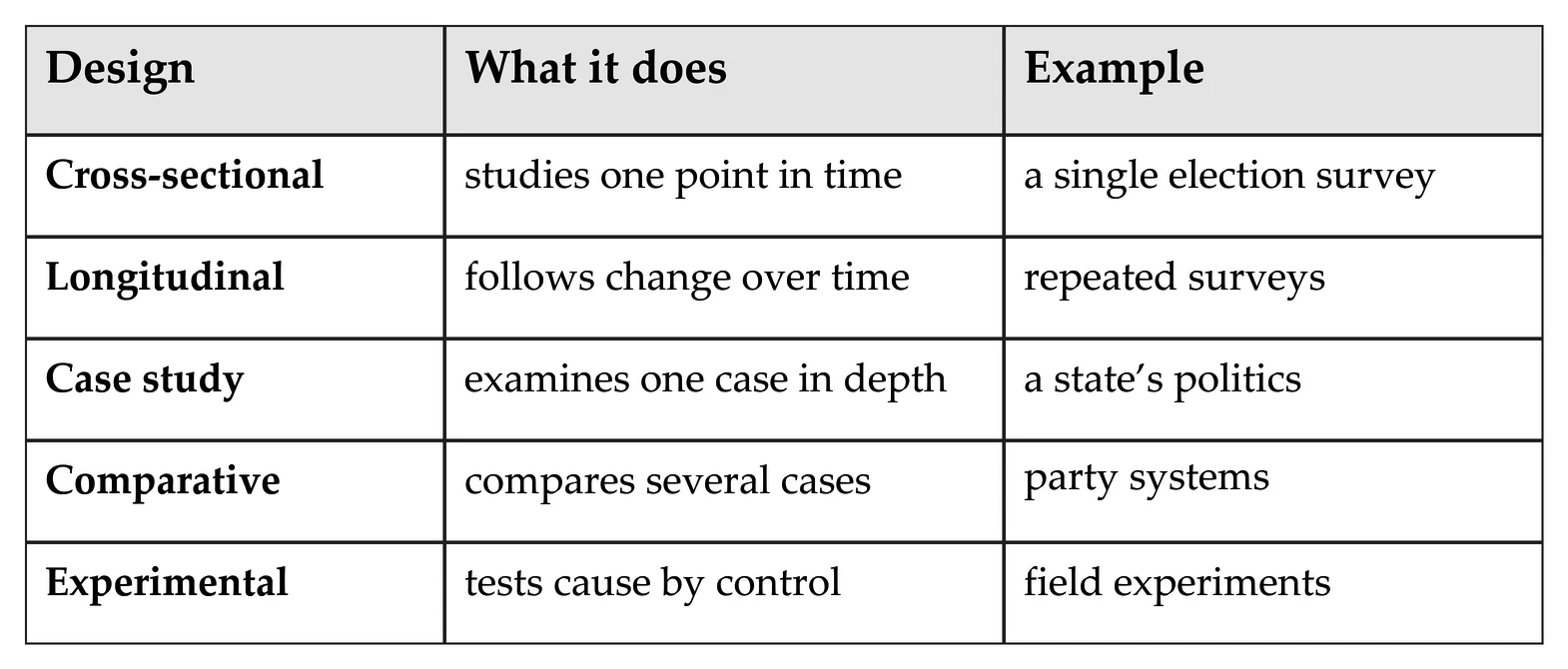
A research problem is a specific puzzle or gap in knowledge that the researcher seeks to address. A research design is the plan that links the questions to the evidence needed to answer them: what will be studied, how cases or respondents will be selected, what data will be collected and how it will be analysed. Earl Babbie distinguishes designs by their purpose and their treatment of time, and J. Bala explains longitudinal designs that follow change over time. Ashok Chousalkar shows that even Kautilya’s Arthashastra followed a systematic method of enquiry.
2.2 Framing Research Questions
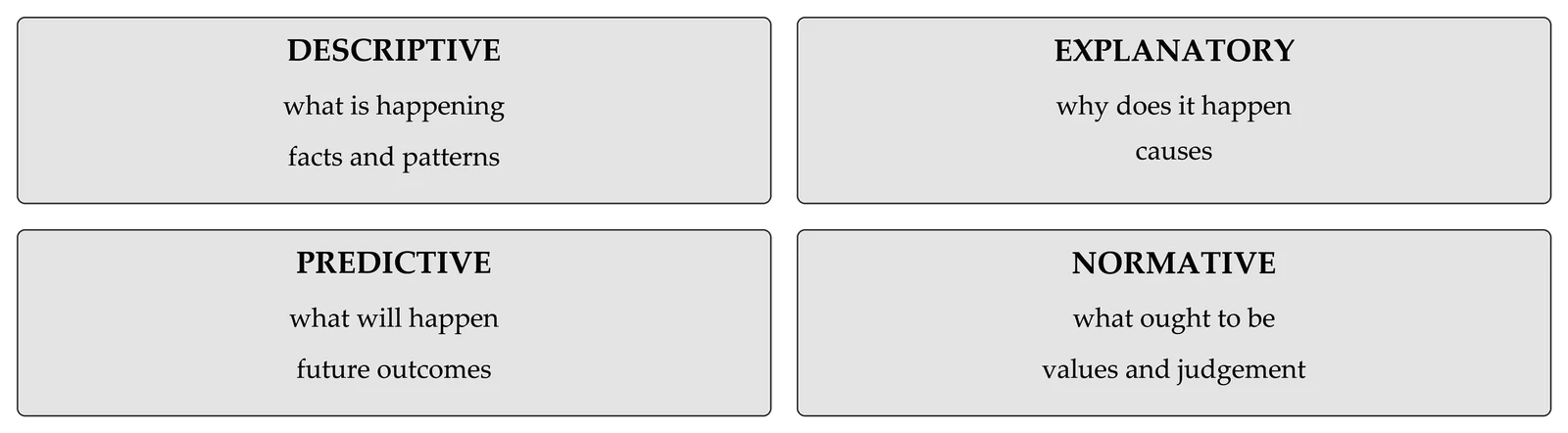
A research question turns a broad topic into a precise, answerable question. Halperin and Heath distinguish descriptive, explanatory, predictive, prescriptive and normative questions, and show how good questions are clear, focused, significant and researchable. A hypothesis offers a tentative answer that can be tested.
2.3 Review of Literature
A literature review surveys and critically evaluates existing research on a topic. It shows what is known, identifies debates and gaps, and justifies the new study. It should synthesise and compare works, not merely summarise them one by one, and it leads directly to the research gap that the proposed study will fill.
2.4 Citation and Sources
Researchers rely on primary sources, such as documents, speeches and data, and secondary sources, such as books and articles that analyse them. They must evaluate sources for reliability and cite them accurately, using a consistent style such as APA, Chicago or MLA. Citation gives credit, allows readers to check claims and is the main defence against plagiarism.
2.5 Important Questions
- Question 1 How is a research problem formulated? Discuss the elements of research design.
- Question 2 Discuss the importance of framing research questions in political research.
- Question 3 Discuss the purpose and method of reviewing literature in research.
- Question 4 Discuss the importance of sources and citation in academic research.
DU asks the same idea in different words. So learn one broad answer for each question below; the same answer works for every question joined by OR.
Important Question 1
How is a research problem formulated? Discuss the elements of research design.
OR
Discuss the different types of research design in social science.
OR
Examine the importance of research design with reference to Babbie and Bala.
Model Answer
“Neither the life of an individual nor the history of a society can be understood without understanding both.”
— C. Wright Mills, The Sociological Imagination (1959)
Introduction. Every research project begins with a problem: something puzzling, unknown or contested that the researcher wants to understand. Formulating the problem clearly and designing a plan to investigate it are the most important steps in research. A good research design ensures that the evidence collected can actually answer the question, avoiding wasted effort and misleading conclusions.
1. The Research Problem
A research problem is a specific issue, puzzle or gap in knowledge. It may arise from contradictions in existing research, unexplained events, policy concerns or the researcher’s own experience. It is narrower and more precise than a general topic.
2. Sources of Problems
Problems come from theory, gaps in literature, social issues and personal curiosity. C. Wright Mills urged researchers to connect personal troubles with public issues, seeing how individual experiences reflect wider social structures.
3. Criteria of a Good Problem
A good research problem is significant, contributing to knowledge or practice; feasible with available time, resources and access; original rather than repeating existing work; clearly defined; and ethically acceptable.
4. From Topic to Problem
Researchers narrow a broad topic, such as Indian elections, into a specific problem, such as why women’s turnout has risen in recent decades. This makes the problem manageable and researchable.
5. Meaning of Research Design
Babbie describes research design as the plan for finding out what you want to know: deciding what to observe, how to select cases, what to measure and how to analyse the data. It links the research question to the evidence.
6. Purposes of Research
Babbie identifies three purposes: exploration, to gain initial understanding of a new topic; description, to report what situations and events are like; and explanation, to discover why things happen.
7. Units of Analysis
The unit of analysis is what or whom the study examines: individuals, groups, organisations, states or events. Confusing levels can lead to the ecological fallacy, drawing conclusions about individuals from data on groups.
8. Cross-Sectional and Longitudinal Designs
Cross-sectional designs study a population at one point in time. J. Bala explains longitudinal designs, which study change over time: trend studies of a population at different times, cohort studies of a specific group and panel studies of the same individuals.
9. Case Study and Comparative Designs
Case studies examine one case in depth, such as the politics of one state, while comparative designs compare several cases to find similarities and differences that explain outcomes.
10. Experimental Designs
Experimental designs test causal claims by comparing a treatment group with a control group. Field experiments and natural experiments are increasingly used in political science to study voting and policy effects.
11. Sampling
Researchers select samples from populations. Probability sampling, such as random sampling, allows generalisation, while non-probability sampling, such as purposive or snowball sampling, is used where random selection is impossible.
12. Measurement
Concepts must be operationalised into measurable indicators. Good measurement is valid, measuring what it claims to measure, and reliable, giving consistent results.
13. Chousalkar on Kautilya’s Method
Ashok Chousalkar shows that the Arthashastra followed a systematic methodology based on anvikshiki, reasoned enquiry, and on tantrayukti, devices of systematic exposition and argument, showing that methodical enquiry has deep roots in Indian thought.
14. Practical and Ethical Limits
Research design must consider time, money, access to respondents and ethical issues such as consent and harm, which may limit what designs are possible.
15. Evaluation
A clearly formulated problem and a well-planned design are the foundation of good research, determining whether its findings will be credible.
Conclusion. Thus, research begins with a clearly formulated problem that is significant, feasible and original. Research design, as Babbie explains, plans how to answer it through choices of purpose, units, time dimension, cases, sampling and measurement, with longitudinal designs, discussed by Bala, tracking change over time.
Important Question 2
Discuss the importance of framing research questions in political research.
OR
Examine Halperin and Heath’s classification of research questions.
OR
What makes a good research question? Discuss.
Model Answer
“I keep six honest serving-men (They taught me all I knew); Their names are What and Why and When And How and Where and Who.”
— Rudyard Kipling, Just So Stories (1902)
Introduction. The research question is the heart of any research project. It defines what the researcher wants to know, guides the choice of methods and data and determines what counts as an answer. Sandra Halperin and Oliver Heath, in Political Research: Methods and Practical Skills, explain how to find and formulate good research questions.
1. Why Questions Matter
A clear question focuses the research, prevents the researcher from collecting irrelevant information and makes it possible to judge whether the research has succeeded. Vague questions produce vague answers.
2. Halperin and Heath’s Types
Halperin and Heath distinguish descriptive questions about what is happening, explanatory questions about why, predictive questions about what will happen, prescriptive questions about what should be done and normative questions about what is right or just.
3. Descriptive Questions
Descriptive questions ask about characteristics and patterns, such as how many women contest elections or how voters’ attitudes have changed. They provide the factual basis for further analysis.
4. Explanatory Questions
Explanatory questions ask why something happens, such as why some states have higher turnout. They seek causes and are central to building theory.
5. Predictive and Prescriptive Questions
Predictive questions ask what is likely to happen, such as the effects of a new electoral rule. Prescriptive questions ask what should be done to achieve a goal, connecting research to policy.
6. Normative Questions
Normative questions ask what is good, right or just, such as whether reservations are fair. They are answered through reasoned argument rather than data alone.
7. Features of a Good Question
A good research question is clear, focused, researchable with available evidence, significant for theory or practice and original. It should be neither too broad nor too narrow.
8. Sources of Questions
Questions often arise from puzzles, events that existing theory cannot explain; from debates in the literature; from gaps in knowledge; or from new developments in politics.
9. From Topic to Question
Researchers move from a general topic, such as welfare schemes, to a specific question, such as whether cash transfers influence voting behaviour in a particular state.
10. Hypotheses
A hypothesis is a tentative answer to a research question, stating an expected relationship between variables, such as higher education leading to higher political participation. It can be tested with evidence.
11. Variables
The dependent variable is what the research seeks to explain, and independent variables are the factors that may explain it. Clear questions specify these variables.
12. Questions and Methods
The question determines the method: questions about how many suit surveys and statistics, while questions about how and why in particular settings may suit interviews or ethnography.
13. The So-What Test
Researchers should ask why their question matters. A good question makes a contribution to theoretical debates, to understanding a problem or to policy.
14. Common Pitfalls
Common mistakes include questions that are too broad, impossible to answer with available evidence, loaded with the researcher’s values or trivial.
15. An Example from Indian Politics
A student interested in caste and elections might begin with the broad topic of caste and voting. Reading the literature, such as studies of voting behaviour by Sanjay Kumar and Praveen Rai, may lead to a narrower question: has the influence of caste on voting choices declined among young urban voters since 2014? This question is focused, researchable through survey data and significant for debates on Indian democracy.
16. Refining Questions during Research
Research questions are rarely fixed at the start. As researchers read the literature, conduct pilot studies and begin collecting data, they often discover that their questions need to be narrowed, broadened or reformulated. Good researchers treat question formulation as an iterative process, while keeping the final question clearly linked to the evidence collected.
17. Evaluation
Framing a good research question is the most important intellectual step in research, shaping every later choice.
Conclusion. Thus, research questions define what the researcher seeks to know and guide the choice of methods and evidence. Halperin and Heath distinguish descriptive, explanatory, predictive, prescriptive and normative questions, and show that good questions are clear, focused, researchable, significant and original, often leading to testable hypotheses.
Important Question 3
Discuss the purpose and method of reviewing literature in research.
OR
How does a literature review help in identifying a research gap?
OR
What are the features of a good literature review?
Model Answer
“If I have seen further it is by standing on the shoulders of Giants.”
— Isaac Newton, letter to Robert Hooke (1675)
Introduction. No research begins from nothing. Every study builds on what others have already discovered and argued. A literature review is a critical survey of existing research on a topic. It helps the researcher understand the field, avoid repeating work, identify debates and gaps and position the new study in relation to existing knowledge.
1. Meaning
A literature review is a systematic and critical account of published research on a topic, including books, journal articles, reports and theses, organised to show the state of knowledge.
2. Purposes
It helps the researcher learn what is already known, identify key theories and methods, find debates and contradictions, avoid duplication, refine the research question and justify the need for the new study.
3. Types of Review
A narrative review discusses the literature thematically, a systematic review follows explicit procedures to find and assess all relevant studies, and a meta-analysis statistically combines the results of many studies.
4. Finding Literature
Researchers search library catalogues, journal databases such as JSTOR, Google Scholar and repositories of theses such as Shodhganga in India, as well as government and organisational reports.
5. Selecting Sources
Researchers select the most relevant, credible and important works, giving priority to peer-reviewed research, influential classics and recent studies.
6. Reading Critically
A literature review is not a summary. Researchers critically examine each work’s argument, evidence, methods and limitations, asking how convincing it is and how it relates to other works.
7. Organising the Review
Literature can be organised thematically, around key debates; chronologically, showing how understanding has developed; or methodologically, comparing approaches.
8. Synthesis
A good review synthesises the literature, showing patterns, agreements and disagreements across studies rather than discussing each work in isolation.
9. Identifying the Research Gap
The review should reveal what is not yet known, a question unanswered, a group or region not studied, or a method not applied. This research gap justifies the new study, as Manoranjan Mohanty explains in his guide to research proposals.
10. From Gap to Question
Once the gap is identified, the researcher frames research questions and hypotheses that address it, linking the review directly to the proposed study.
11. Writing the Review
The review should be clear, well-structured and focused on the research problem, with accurate citations for every work discussed.
12. Common Mistakes
Common mistakes include listing summaries without analysis, relying on outdated or unreliable sources, ignoring contrary evidence and failing to connect the review to the research question.
13. Literature in Indian Politics
Journals such as Studies in Indian Politics, launched in 2013, and the Economic and Political Weekly are important sources for reviewing literature on Indian politics.
14. Ethics of Review
Researchers must represent other scholars’ arguments fairly and acknowledge them through citation, avoiding plagiarism and misrepresentation.
15. Annotated Bibliography
Many researchers begin by preparing an annotated bibliography, a list of sources with a short note on each one’s argument, evidence, methods and relevance. This helps organise reading and later becomes the raw material for writing the literature review itself.
16. Building a Theoretical Framework
The literature review also helps the researcher choose a theoretical framework, the set of concepts and theories that will guide the study. For example, a study of voting may draw on theories of rational choice, social identity or clientelism found in the literature, which then shape its hypotheses and methods.
17. Systematic Reviews and Evidence
In policy research, systematic reviews gather and assess all available studies on a question using explicit, transparent methods, to reduce bias. Organisations such as the Campbell Collaboration, founded in 2000, produce systematic reviews on social policy, helping policy-makers base decisions on the weight of evidence rather than single studies.
18. Evaluation
A literature review is the foundation on which new research stands. It allows the researcher to see further by building on the work of others.
Conclusion. Thus, a literature review critically surveys existing research to show what is known, identify debates and reveal a research gap. Organised thematically or chronologically and written as a synthesis rather than a summary, it justifies the new study and leads to its research questions, allowing researchers to stand on the shoulders of others.
Important Question 4
Discuss the importance of sources and citation in academic research.
OR
Distinguish between primary and secondary sources.
OR
Why is proper citation necessary? Discuss different citation styles.
Model Answer
“Knowledge is of two kinds. We know a subject ourselves, or we know where we can find information upon it.”
— Samuel Johnson (1775), as recorded by James Boswell
Introduction. Research depends on sources of information and on acknowledging them honestly. Researchers must find reliable sources, evaluate their quality and cite them accurately. Citation gives credit to other scholars, allows readers to check claims and protects the integrity of research by preventing plagiarism.
1. Primary Sources
Primary sources are original materials created at the time of events or by participants, such as government documents, constitutional debates, speeches, laws, court judgments, interviews, survey data and archival records.
2. Secondary Sources
Secondary sources analyse or interpret primary sources, such as books, journal articles and reviews by scholars. Tertiary sources, such as encyclopaedias and textbooks, summarise secondary research.
3. Evaluating Sources
Researchers judge sources by their authority, who produced them; accuracy, whether they are supported by evidence; objectivity, whether they are biased; currency, whether they are up to date; and relevance to the research.
4. Internet Sources
The internet gives access to vast information but also to misinformation. Researchers should prefer official websites, peer-reviewed journals and reputable organisations, and check information against other sources.
5. Meaning of Citation
Citation is the practice of acknowledging the sources of ideas, information, data and words used in research, both in the text and in a list of references or bibliography.
6. Why Cite
Citation gives credit to the original authors, allows readers to locate and verify sources, shows the researcher’s engagement with existing scholarship and protects against plagiarism.
7. Citation Styles
Common styles include APA, an author-date style widely used in social sciences; Chicago, with notes and bibliography or author-date options; MLA, used in humanities; and Harvard, an author-date style. A researcher must use one style consistently.
8. Elements of a Reference
A reference usually includes the author, year, title, publisher or journal, volume and pages, and for online sources, a web address or digital object identifier and date of access.
9. Quotation, Paraphrase and Summary
A quotation reproduces exact words in quotation marks, a paraphrase restates an idea in one’s own words, and a summary condenses a longer argument. All three require citation.
10. Reference Managers
Software such as Zotero and Mendeley helps researchers store sources and format citations automatically, reducing errors.
11. Citing Indian Sources
Indian political research often uses Constituent Assembly Debates, government reports, court judgments, census data and sources in Indian languages, which must be cited with the same care.
12. Plagiarism
Failing to cite sources amounts to plagiarism, presenting others’ work as one’s own. UGC regulations of 2018 set penalties for plagiarism in academic work.
13. Academic Integrity
Honest use of sources is part of academic integrity, the commitment to truthfulness and fairness in research, which sustains trust in scholarship.
14. Common Errors
Common errors include incomplete references, inconsistent style, citing works not actually read and failing to cite paraphrased ideas.
15. Archives
Archives hold original records such as government files, private papers and correspondence. In India, the National Archives of India and the Prime Ministers’ Museum and Library, renamed from the Nehru Memorial Museum and Library in 2023, hold important records for historical and political research.
16. Statistical Sources
Political research in India often uses official statistics from the Census, the National Sample Survey, the National Family Health Survey and election data published by the Election Commission. Researchers must understand how such data is collected and its limitations before using it.
17. Oral Sources and Interviews
Interviews and oral histories are valuable sources, especially for studying the experiences of people who left few written records, such as Partition survivors or rural voters. They must be recorded accurately, used with the consent of those interviewed and cited properly, while recognising that memory can be selective.
18. Evaluation
Careful use and citation of sources makes research credible, verifiable and honest.
Conclusion. Thus, research relies on primary, secondary and tertiary sources, which must be evaluated for authority, accuracy, objectivity and relevance. Citation, in a consistent style such as APA, Chicago or MLA, gives credit, enables verification and prevents plagiarism, making it essential to academic integrity.
Short Notes
(a) Research gap
An unanswered question or unexplored area in existing literature, identified through a literature review, which justifies the need for a new study.
(b) Longitudinal design
A research design that studies change over time, through trend, cohort or panel studies, in contrast to cross-sectional designs that study one point in time.
(c) Ecological fallacy
The error of drawing conclusions about individuals from data about groups, such as assuming that every voter in a district behaves like the district’s average.
More notes: MDSE-11 Research Methods in Politics
These notes are prepared by PADHO TO AISE for study help. They are not an official University of Delhi publication.