
Semester VII DSE-8 Feminism: Theory and Practice
Unit I · 19 min read · Updated 24 Nov 2026
As per the University of Delhi (DU) BA (Hons) Political Science syllabus
Contents
- 1.1 Sex and Gender
- 1.2 Biologism and Social Constructivism
- 1.3 Patriarchy and Matriarchy
- 1.4 Masculinities and Sexualities
- 1.5 Important Questions
- Discuss the feminist distinction between sex and gender.
- What is patriarchy? Discuss feminist theories of patriarchy.
- Discuss the concept of masculinities in feminist and gender theory.
- Discuss feminist perspectives on sexuality.
- Short Notes
कोई स्त्री के रूप में जन्म नहीं लेती, बल्कि स्त्री बन जाती है।
One is not born, but rather becomes, a woman.
— Simone de Beauvoir, The Second Sex (1949)
FEMINISM begins with a simple but radical question: are the differences between women and men natural, or are they made by society? Feminist theory answers with a set of key concepts. The distinction between sex and gender separates biology from social roles; the debate between biologism and social constructivism asks how far bodies determine destiny. Patriarchy names the system of male domination, while matriarchy, masculinities and sexualities widen the analysis of power. This chapter explains these concepts, drawing on Diane Richardson, V. Geetha, Alison Jaggar and Sally Hines.
1.1 Sex and Gender
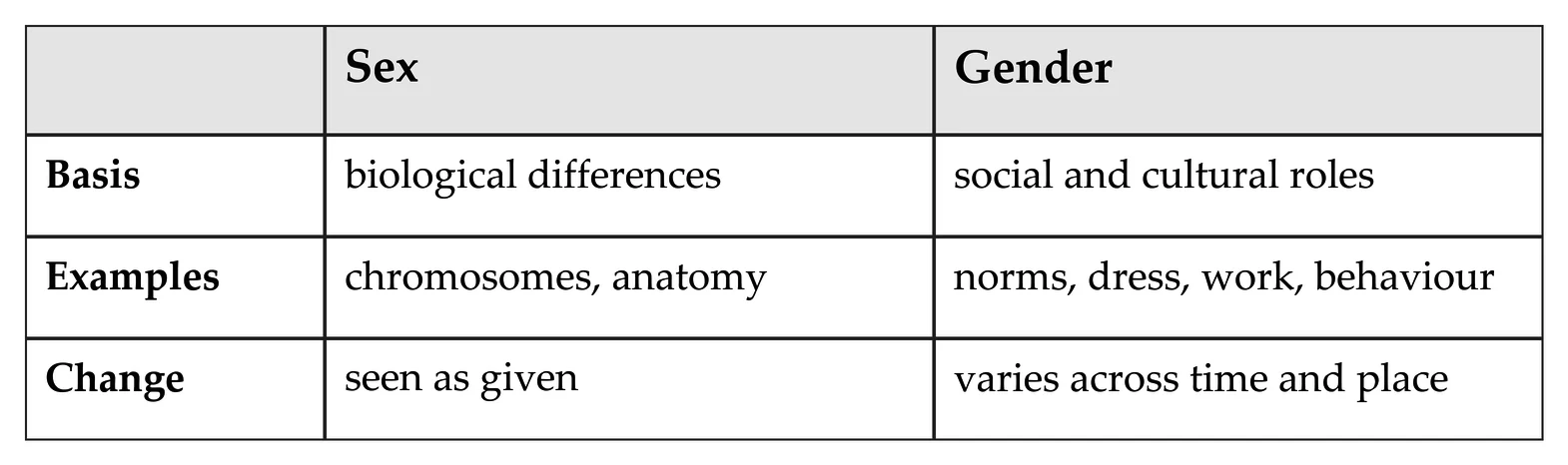
Feminists distinguish sex, the biological differences between female and male bodies, from gender, the social and cultural roles, expectations and identities attached to being a woman or a man. Ann Oakley argued in 1972 that while sex is a matter of biology, gender is a matter of culture. This distinction allowed feminists to argue that women’s subordination is not natural but produced by society, and can therefore be changed. V. Geetha shows how gender is produced in everyday life in India through family, work, caste and religion.
1.2 Biologism and Social Constructivism
Biologism, or biological determinism, holds that differences in social roles follow from differences in bodies, as in Freud’s phrase ‘anatomy is destiny’. Social constructivism holds that gender is learned through socialisation and varies across societies, as Margaret Mead’s studies suggested. Judith Butler went further, arguing that gender is performative, created through repeated acts, and that even the category of sex is shaped by social discourse.

1.3 Patriarchy and Matriarchy
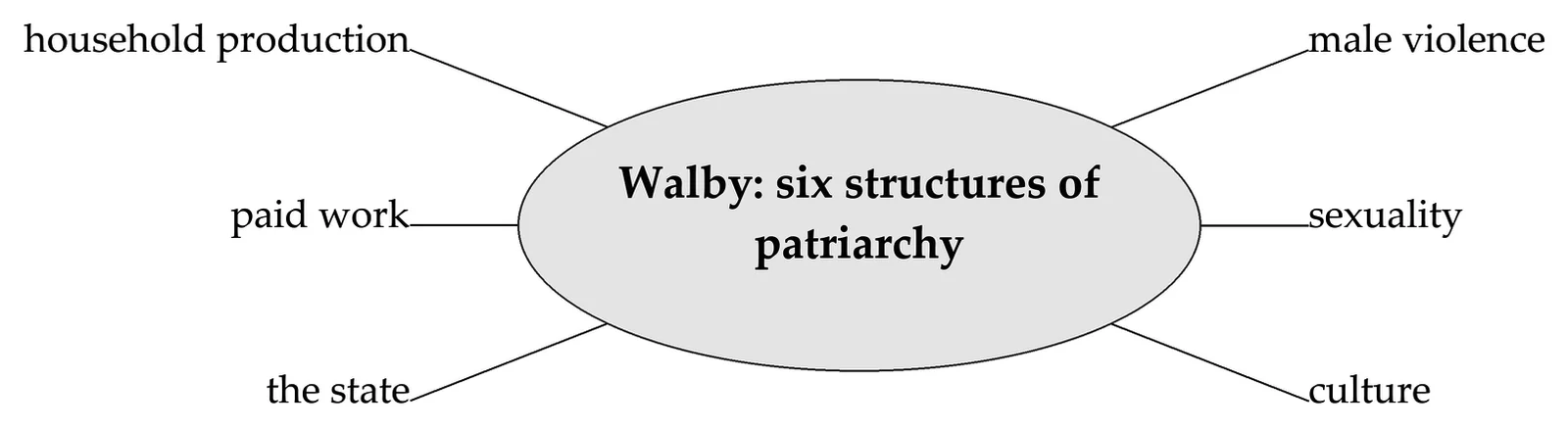
Patriarchy, literally the rule of the father, is used by feminists to describe a system of social structures and practices in which men dominate, oppress and exploit women. Sylvia Walby identified six structures of patriarchy, and V. Geetha shows how patriarchy works through control of women’s sexuality, labour and property, closely tied to caste in India. Matriarchy, rule by women, is rare or absent historically, but matrilineal societies, such as the Khasis of Meghalaya, trace descent through women.
1.4 Masculinities and Sexualities
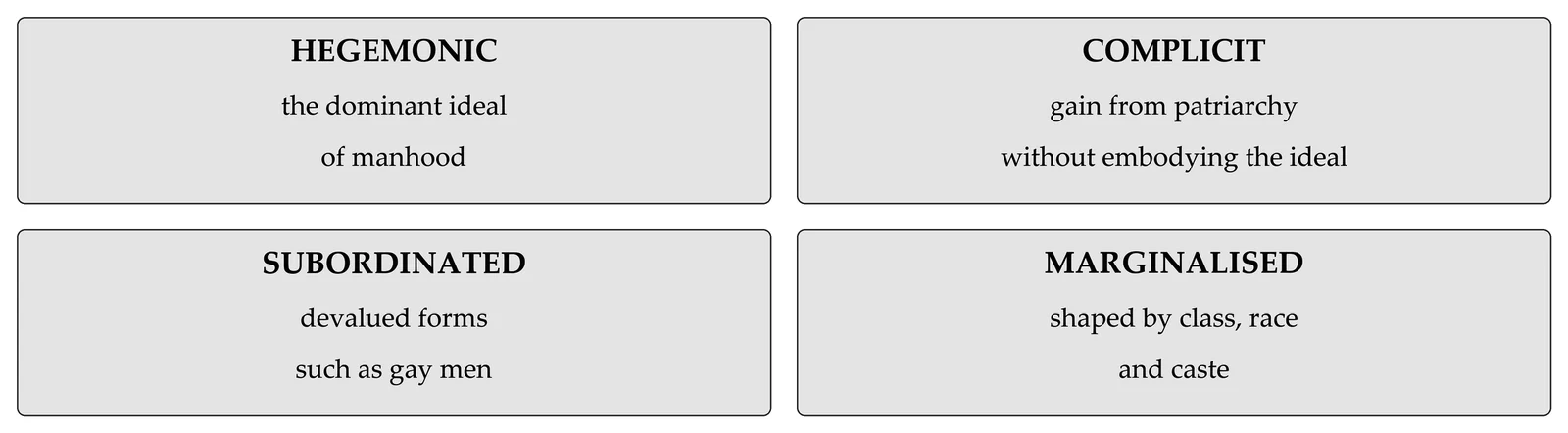
Gender studies also examine men. R.W. Connell showed that there are many masculinities, organised in a hierarchy dominated by hegemonic masculinity, the ideal that legitimises men’s dominance. Sexualities are also socially shaped: Michel Foucault argued that sexuality is produced by discourses of power, and feminists criticise compulsory heterosexuality. In India, struggles over Section 377 and transgender rights brought sexuality into constitutional debate.
1.5 Important Questions
- Question 1 Discuss the feminist distinction between sex and gender.
- Question 2 What is patriarchy? Discuss feminist theories of patriarchy.
- Question 3 Discuss the concept of masculinities in feminist and gender theory.
- Question 4 Discuss feminist perspectives on sexuality.
DU asks the same idea in different words. So learn one broad answer for each question below; the same answer works for every question joined by OR.
Important Question 1
Discuss the feminist distinction between sex and gender.
OR
Examine the debate between biologism and social constructivism.
OR
‘One is not born, but rather becomes, a woman.’ Discuss.
Model Answer
“‘Sex’ is a word that refers to the biological differences between male and female. ‘Gender’ however is a matter of culture: it refers to the social classification into ‘masculine’ and ‘feminine’.”
— Ann Oakley, Sex, Gender and Society (1972)
Introduction. The distinction between sex and gender is one of the founding ideas of modern feminist theory. It separates biological differences from the social roles and meanings attached to them, allowing feminists to challenge the claim that women’s subordination is natural. Yet the distinction itself has been debated, from the biologism versus social constructivism controversy to Judith Butler’s argument that both sex and gender are socially produced.
1. Why the Distinction Matters
For centuries, women’s exclusion from education, property and politics was justified by claims about their nature. By showing that many differences are social rather than biological, feminists argued that inequality could be changed through education, law and social reform.
2. Sex
Sex refers to biological characteristics such as chromosomes, hormones and reproductive organs, which are used to classify people as female or male. These differences were long assumed to be fixed and to explain differences in ability and role.
3. Gender
Gender refers to the social and cultural roles, behaviours, expectations and identities considered appropriate for women and men, described as femininity and masculinity. Gender varies across societies and changes over time, showing that it is socially produced.
4. Oakley and the Distinction
The psychologist Robert Stoller distinguished sex from gender identity in 1968, and the sociologist Ann Oakley, in Sex, Gender and Society (1972), made the distinction central to feminist analysis, arguing that sex is a matter of biology while gender is a matter of culture.
5. Beauvoir: Becoming a Woman
Simone de Beauvoir, in The Second Sex (1949), argued that one is not born but becomes a woman. Women are defined as the Other in relation to men, who are treated as the norm. Femininity is not a natural essence but a situation imposed by society.
6. Biologism
Biologism holds that social differences follow from biological ones. Aristotle saw women as naturally inferior, Freud wrote that anatomy is destiny, and sociobiologists such as E.O. Wilson in the 1970s explained gender roles through evolution. Such views make inequality appear natural and unchangeable.
7. Evidence against Biologism
The anthropologist Margaret Mead, in Sex and Temperament (1935), described societies in New Guinea where both sexes were gentle, both were aggressive, or women were dominant. Such variation suggests that temperament and roles are shaped by culture rather than biology.
8. Social Constructivism
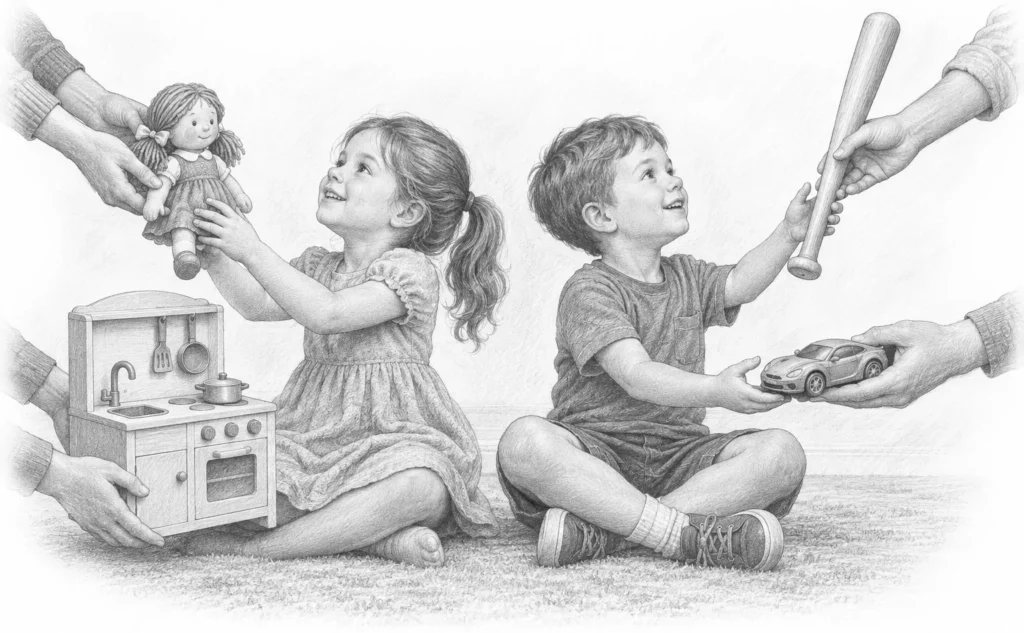
Social constructivists argue that gender is learned through socialisation in the family, school, religion and media. Girls and boys are taught different behaviours, given different toys and expected to take different roles, which come to seem natural.
9. Geetha on Gender in India
V. Geetha, in Gender (2002), shows how gender is produced in everyday Indian life through the division of labour, control over women’s mobility and sexuality, marriage practices and caste. Son preference and the child sex ratio of 918 girls per 1,000 boys in the Census of 2011 show the effects of gender norms.
10. Richardson on Conceptualising Gender
Diane Richardson explains that gender can be understood in several ways: as roles learned through socialisation, as a social structure of inequality, as an identity and as something people do. Each approach highlights different aspects of how gender works.
11. Butler: Gender as Performance
Judith Butler, in Gender Trouble (1990), argued that gender is performative: it is created through repeated acts that produce the appearance of a natural identity. She also argued that the category of sex is itself shaped by social discourse, questioning the neat separation of sex and gender.
12. Beyond the Binary
The existence of intersex and transgender people challenges the idea of two fixed sexes. In NALSA v Union of India (2014), the Supreme Court recognised the right of transgender persons to self-identify their gender, including as a third gender.
13. Intersectionality
Kimberlé Crenshaw introduced the term intersectionality in 1989 to show how gender combines with race and class. In India, scholars such as Sharmila Rege show how caste and gender together shape the lives of Dalit women.
14. Criticisms
Some feminists argue that social constructivism neglects the body and real biological experiences such as pregnancy. Others, called cultural or difference feminists, celebrate distinct female qualities rather than denying difference.
15. Evaluation
The sex/gender distinction gave feminism a powerful tool to challenge the naturalness of inequality. Later debates have complicated it, but the core insight that gender is socially made remains central.
Conclusion. Thus, feminists distinguish sex, the biological differences between bodies, from gender, the social roles and identities attached to them. Against biologism, social constructivists such as Beauvoir and Oakley showed that gender is made by society, and Butler argued that it is performed. This insight underlies the feminist claim that gender inequality can be changed.
Important Question 2
What is patriarchy? Discuss feminist theories of patriarchy.
OR
Examine V. Geetha’s analysis of patriarchy with reference to India.
OR
Distinguish between patriarchy and matriarchy.
Model Answer
“Our society, like all other historical civilizations, is a patriarchy.”
— Kate Millett, Sexual Politics (1970)
Introduction. Patriarchy is the central concept through which feminists explain women’s subordination. Literally meaning the rule of the father, it is used by feminists to describe a system of male domination that runs through the family, the economy, the state and culture. Different feminist traditions have theorised patriarchy differently, and in India scholars such as V. Geetha and Uma Chakravarti link it closely to caste.
1. Meaning of Patriarchy
Feminists use patriarchy to mean a system of social structures and practices in which men dominate, oppress and exploit women. It is not simply individual men’s behaviour but a structure that shapes the lives of all women and men.
2. Older Uses of the Term
Before feminism, patriarchy referred to the authority of the father over his household. Robert Filmer’s Patriarcha (1680) justified royal power as fatherly authority, which John Locke criticised, and Max Weber described patriarchalism as a form of traditional authority.
3. Millett and Radical Feminism
Kate Millett, in Sexual Politics (1970), argued that the relationship between the sexes is political, a relationship of power. Patriarchy is universal, maintained through the family, ideology, economic dependence, education and force.
4. Walby’s Six Structures
Sylvia Walby, in Theorizing Patriarchy (1990), identified six structures: household production, paid work, the state, male violence, sexuality and culture. She distinguished private patriarchy, centred on the household, from public patriarchy, in which women enter public life but remain subordinated there.
5. Socialist Feminist Views
Socialist feminists such as Heidi Hartmann argued that patriarchy and capitalism are interlinked systems. Capitalism benefits from women’s unpaid domestic labour and cheap paid labour, while patriarchy shapes how capitalism allocates work.
6. Geetha on Patriarchy
V. Geetha, in Patriarchy (2007), shows how patriarchy works through the control of women’s labour, sexuality, reproduction and mobility. She stresses that patriarchy takes different forms across classes, castes and communities and is reproduced through everyday practices and institutions.
7. Brahmanical Patriarchy
The historian Uma Chakravarti used the term Brahmanical patriarchy in 1993 to show how caste depends on controlling women’s sexuality. Endogamy, marriage within the caste, requires strict control over upper-caste women, so caste and patriarchy reinforce each other.
8. Bargaining with Patriarchy
Deniz Kandiyoti argued in 1988 that women develop strategies within the constraints of patriarchy, which she called bargaining with patriarchy. In the classic patriarchy of South Asia, women may accept subordination as young brides in expectation of authority as mothers-in-law.
9. Mechanisms of Patriarchy
Patriarchy operates through inheritance and property, marriage and dowry, the division of labour, violence and the threat of violence, religious norms, law and culture, which together limit women’s choices.
10. Matriarchy
Matriarchy means rule by women. Nineteenth-century thinkers such as J.J. Bachofen and Friedrich Engels believed that early societies were matriarchal, and Engels described the rise of private property as the world-historic defeat of the female sex. Most anthropologists doubt that true matriarchies existed.
11. Matrilineal Societies
Matrilineal societies trace descent and inheritance through women, as among the Nairs of Kerala under the marumakkathayam system and the Khasis and Garos of Meghalaya. Women have more security, but political authority often lies with men, such as maternal uncles.
12. Patriarchy in Contemporary India
Patriarchy appears in son preference, dowry, honour killings, the marital rape exception in criminal law and the low share of women in paid work and politics. In 2018, the Supreme Court issued guidelines against honour killings and interference by caste councils.
13. Criticisms of the Concept
Critics argue that patriarchy is too universal and unchanging, ignoring differences among women of different races, castes and classes. Some prefer to speak of patriarchies in the plural, each shaped by history and context.
14. Change and Resistance
Education, employment, legal reforms and women’s movements have weakened some forms of patriarchy, but new forms emerge, such as online harassment and control through technology.
15. Evaluation
Patriarchy remains a powerful concept for understanding gender inequality, especially when, as Geetha and Chakravarti show, it is linked to caste, class and history.
Conclusion. Thus, patriarchy is a system of male domination that works through the family, economy, state, sexuality and culture, as Millett and Walby show. In India, Geetha and Chakravarti link it to caste and the control of women’s sexuality. Matriarchy remains largely hypothetical, though matrilineal societies show that other arrangements are possible.
Important Question 3
Discuss the concept of masculinities in feminist and gender theory.
OR
Examine R.W. Connell’s concept of hegemonic masculinity.
OR
How are masculinities related to patriarchy?
Model Answer
“Hegemonic masculinity can be defined as the configuration of gender practice which embodies the currently accepted answer to the problem of the legitimacy of patriarchy, which guarantees (or is taken to guarantee) the dominant position of men and the subordination of women.”
— R.W. Connell, Masculinities (1995)
Introduction. If gender is socially constructed, then masculinity too is a social product, not a natural fact. From the 1980s, scholars began to study men and masculinities as part of gender analysis. R.W. Connell showed that there are many masculinities, ranked in a hierarchy, and that the dominant form helps legitimise patriarchy. Studying masculinities helps explain how gender inequality is reproduced.
1. Why Study Men
Early feminist research focused on women, treating men as the unexamined norm. Studying masculinities makes men visible as gendered beings and shows how male power is produced and maintained.
2. Masculinity as Social Construction
Masculinity refers to the qualities and behaviours expected of men in a society, such as strength, rationality, control of emotions and the role of provider. These expectations vary across cultures and change over time.
3. Plural Masculinities
There is no single masculinity. Different groups of men, by class, race, caste, sexuality and age, live different forms of manhood. These masculinities are related to one another through power.
4. Hegemonic Masculinity
Connell defined hegemonic masculinity as the culturally dominant form of manhood that legitimises men’s dominance over women. Few men fully embody it, but it serves as an ideal against which men are measured.
5. Complicit Masculinity
Most men do not meet the hegemonic ideal but benefit from it. Connell calls this complicit masculinity: men who gain from patriarchy without actively enforcing its most aggressive forms.
6. Subordinated and Marginalised Masculinities
Subordinated masculinities, such as those of gay men, are devalued within the gender order. Marginalised masculinities are those of men from oppressed classes, races or castes, whose manhood is shaped by their social position.
7. The Patriarchal Dividend
Connell used the term patriarchal dividend for the advantages men in general gain from the overall subordination of women, in income, authority, safety and respect, even if individual men do not seek them.
8. Masculinity and Violence
Ideals of masculinity that stress dominance, honour and toughness are linked to violence against women, other men and oneself. Ideas such as family honour justify control over women and violence in their name.
9. Colonial Masculinities
Mrinalini Sinha, in Colonial Masculinity (1995), showed how British rulers portrayed themselves as manly and educated Bengali men as effeminate, to justify colonial rule. Colonial classifications of martial races drew on similar ideas.
10. Gandhi and Nandy
Ashis Nandy, in The Intimate Enemy (1983), argued that Gandhi challenged colonial masculinity by valuing non-violence, care and androgyny, qualities associated with femininity, as sources of strength in the freedom struggle.
11. Caste and Masculinity
In India, dominant-caste masculinity is often tied to land, honour and control over women, while Dalit men face humiliation of their manhood. Caste violence is often expressed through attacks on women, showing how caste and gender interact.
12. Changing Masculinities
Economic change, unemployment and women’s education are reshaping masculinities. Some speak of a crisis of masculinity as men lose traditional roles, while others see new, more caring forms of fatherhood and partnership.
13. Engaging Men
Campaigns such as UN Women’s HeForShe, launched in 2014, and programmes that engage boys and men in preventing violence show that gender equality requires changing masculinities, not only empowering women.
14. Criticisms
Critics argue that hegemonic masculinity is vague and hard to identify empirically. Connell and James Messerschmidt revised the concept in 2005, emphasising its local, regional and global forms and its capacity to change.
15. Evaluation
The study of masculinities shows that patriarchy is maintained through hierarchies among men as well as between men and women, and that gender equality requires transforming masculinity.
Conclusion. Thus, masculinities are socially constructed and plural. Connell showed that hegemonic masculinity legitimises patriarchy, while complicit, subordinated and marginalised masculinities occupy different positions in the gender order. In India, colonialism, caste and nationalism have shaped masculinities, and gender equality requires changing them.
Important Question 4
Discuss feminist perspectives on sexuality.
OR
Examine the relationship between sexuality, gender and power.
OR
Discuss the struggle for the rights of sexual minorities in India.
Model Answer
“I am what I am, so take me as I am.”
— Words of Goethe quoted by Chief Justice Dipak Misra, Navtej Singh Johar v Union of India (2018)
Introduction. Sexuality refers to sexual desires, practices and identities. Although it seems personal and natural, feminist and queer theorists show that sexuality is shaped by social norms, laws and power. The control of women’s sexuality is central to patriarchy, and the rights of sexual minorities have become an important issue of equality and freedom, including in India.
1. Meaning of Sexuality
Sexuality includes desire, sexual behaviour, sexual orientation and identity. Societies regulate it through marriage, religion, law and morality, deciding which forms are acceptable and which are condemned.
2. Foucault on Sexuality
Michel Foucault, in The History of Sexuality (1976), argued that modern societies did not simply repress sexuality but produced it through discourses of medicine, psychiatry and law, which classified people and created categories such as the homosexual. Sexuality is a field of power.
3. Radical Feminist Views
Radical feminists argued that sexuality is a central site of male power over women. Catharine MacKinnon saw sexuality as to feminism what work is to Marxism, and many radical feminists campaigned against pornography and sexual violence.
4. Compulsory Heterosexuality
Adrienne Rich, in 1980, argued that heterosexuality is not simply a natural preference but a compulsory institution imposed on women through social pressure, economic dependence and violence, which marginalises lesbian existence.
5. Heteronormativity
Heteronormativity is the assumption that heterosexuality is the normal and natural form of sexuality and that people fall into two genders with matching roles. It shapes laws on marriage, family and inheritance.
6. Control of Women’s Sexuality
Patriarchy controls women’s sexuality through ideals of chastity, purity and family honour, restrictions on mobility and dress, and control over marriage. In India, this control is linked to caste endogamy, as Uma Chakravarti shows.
7. Sexual Violence and Consent
Feminists have campaigned to reform rape laws, focusing on consent and the experiences of survivors. The criminal law reforms of 2013 widened the definition of rape, but marital rape remains outside criminal law in India.
8. Queer Theory
Queer theory, developed by Judith Butler, Eve Sedgwick and others, challenges fixed categories of gender and sexuality, treating them as fluid and socially produced. It questions the norms that define some sexualities as normal and others as deviant.
9. Section 377
Section 377 of the Indian Penal Code, enacted in 1860, criminalised carnal intercourse against the order of nature. The Delhi High Court read it down in Naz Foundation (2009), the Supreme Court reversed this in 2013, and in Navtej Singh Johar (2018) a Constitution Bench decriminalised consensual same-sex relations.
10. Transgender Rights
In NALSA (2014), the Supreme Court recognised transgender persons’ right to self-identify their gender. The Transgender Persons (Protection of Rights) Act, 2019, followed, though activists criticised its requirement of certification by officials.
11. Marriage Equality
In Supriyo Chakraborty v Union of India (2023), the Supreme Court declined to recognise same-sex marriage, leaving the matter to Parliament, while acknowledging discrimination faced by queer couples.
12. Sexuality, Caste and Religion
Control over who may marry whom underlies opposition to inter-caste and inter-faith marriages, honour killings and recent state laws regulating religious conversion for marriage. Sexuality is thus linked to community boundaries.
13. Sex Work Debates
Feminists are divided on sex work: abolitionists see it as exploitation, while others defend sex workers’ rights and agency. In 2022, the Supreme Court affirmed that sex workers are entitled to dignity and protection from police harassment.
14. Sexuality and Agency
Some feminists emphasise not only danger but also pleasure and agency in sexuality, arguing that women and sexual minorities have the right to define their own desires free from moral policing.
15. Evaluation
Feminist and queer perspectives show that sexuality is shaped by power and that sexual freedom and equality are central to gender justice.
Conclusion. Thus, feminist perspectives show that sexuality is socially regulated and shaped by power, from Foucault’s discourses to Rich’s compulsory heterosexuality. In India, the control of women’s sexuality is tied to caste, and struggles over Section 377, transgender rights and marriage equality show sexuality becoming a question of constitutional rights.
Short Notes
(a) Brahmanical patriarchy
Uma Chakravarti’s term for the system in which caste hierarchy and gender subordination reinforce each other, especially through strict control over upper-caste women’s sexuality to maintain caste purity and endogamy.
(b) Hegemonic masculinity
R.W. Connell’s concept of the culturally dominant form of manhood in a society, which legitimises men’s dominance over women and other men, and against which all men are measured.
(c) Performativity
Judith Butler’s idea that gender is not a fixed identity but is produced through repeated acts and performances, which create the appearance of a natural gender.
More notes: DSE-8 Feminism: Theory and Practice
These notes are prepared by PADHO TO AISE for study help. They are not an official University of Delhi publication.