
Semester V MDSE-3b Understanding Ambedkar
Unit IV · 22 min read · Updated 24 Nov 2026
As per the University of Delhi (DU) BA (Hons) Political Science syllabus
Contents
- 4.1 Nation and Nationalism
- Nation as Feeling and Fraternity
- Caste Against Nationhood
- Critique of Upper-Caste Nationalism
- Fraternity in the Preamble
- 4.2 Democracy and Its Conditions
- Democracy as a Way of Life
- Conditions Precedent for the Successful Working of Democracy
- Three Warnings of 1949
- Ambedkar as Legislator and Administrator
- 4.3 Citizenship and the Critique of the Congress and Gandhi
- Citizenship as Equal Membership
- What Congress and Gandhi Have Done to the Untouchables
- Ambedkar’s Legacy in Democratic Politics
- 4.4 Important Questions
- Discuss Ambedkar’s views on nation and nationalism.
- Discuss Ambedkar’s views on democracy and the conditions for its success.
- Examine Ambedkar’s critique of the Congress and Gandhi in What Congress and Gandhi Have Done to the Untouchables.
- Discuss Ambedkar’s idea of citizenship and its relation to dignity and rights.
- Short Notes
राजनीतिक लोकतंत्र तब तक टिक नहीं सकता जब तक उसके आधार में सामाजिक लोकतंत्र न हो।
Political democracy cannot last unless there lies at the base of it social democracy.
— B. R. Ambedkar, Speech in the Constituent Assembly, 25 November 1949
WWHAT makes a people a nation, and what makes a democracy work? Ambedkar answered these questions from the standpoint of those excluded by caste. He argued that a society divided into thousands of castes was not yet a nation, that democracy must be social as well as political, and that the untouchables needed rights and representation, not charity. He was also a sharp critic of the Congress and Gandhi, whom he accused of protecting the interests of the upper castes. This chapter studies Unit IV of the syllabus: Ambedkar’s views on nation and nationalism and on democracy and citizenship.
4.1 Nation and Nationalism
Nation as Feeling and Fraternity
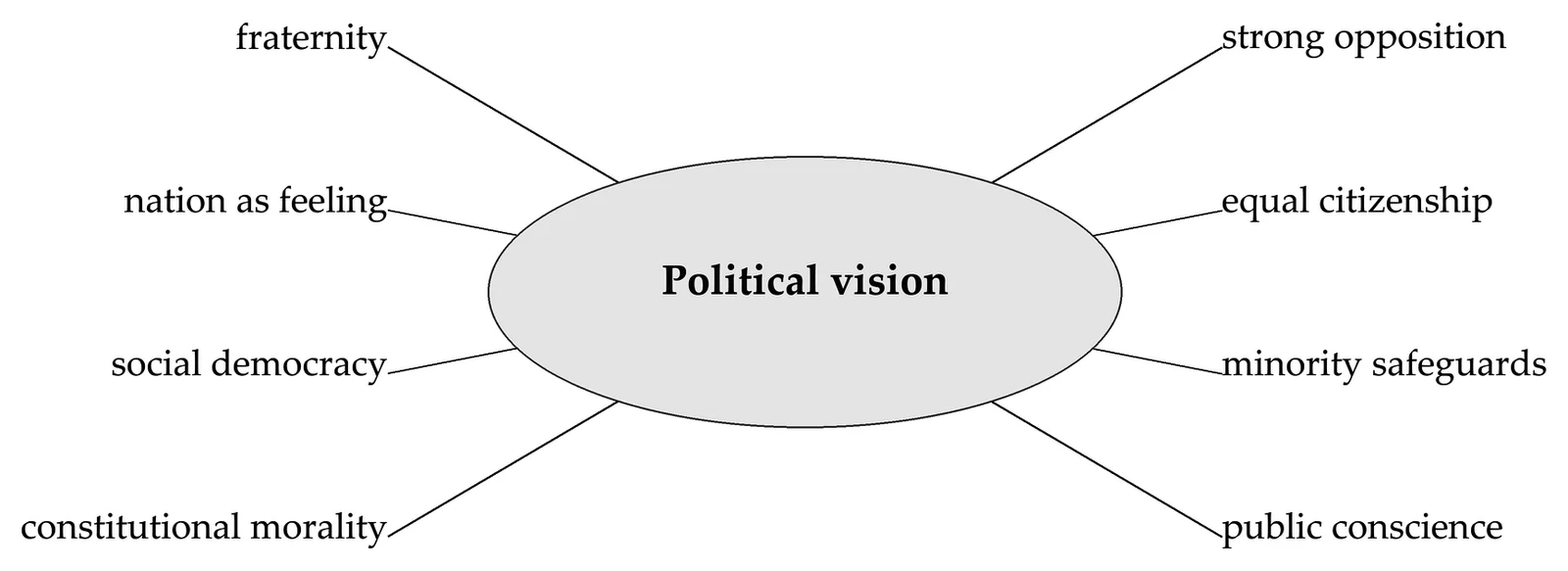
Ambedkar did not define a nation by territory, language or religion alone. Following the French thinker Ernest Renan, he saw a nation as a spiritual principle, a feeling of belonging together based on shared memories, shared sufferings and a common will to live together. The essence of nationhood, for Ambedkar, is fraternity, i.e. a sense of common brotherhood among all members of the society. Without fraternity, people may live on the same land and under the same government, but they do not form a nation.
Caste Against Nationhood
From this view followed his most challenging claim: India divided by caste was not yet a nation. In Annihilation of Caste he argued that Hindu society is not a society but a collection of castes, each conscious only of itself, with no common life or common feeling. In his last speech in the Constituent Assembly he warned that believing India was already a nation was a great delusion, since people divided into thousands of castes could not be a nation. Castes, he said, are anti-national, because they generate jealousy and antipathy between groups. India had to become a nation by building fraternity, and this required ending caste.
Critique of Upper-Caste Nationalism
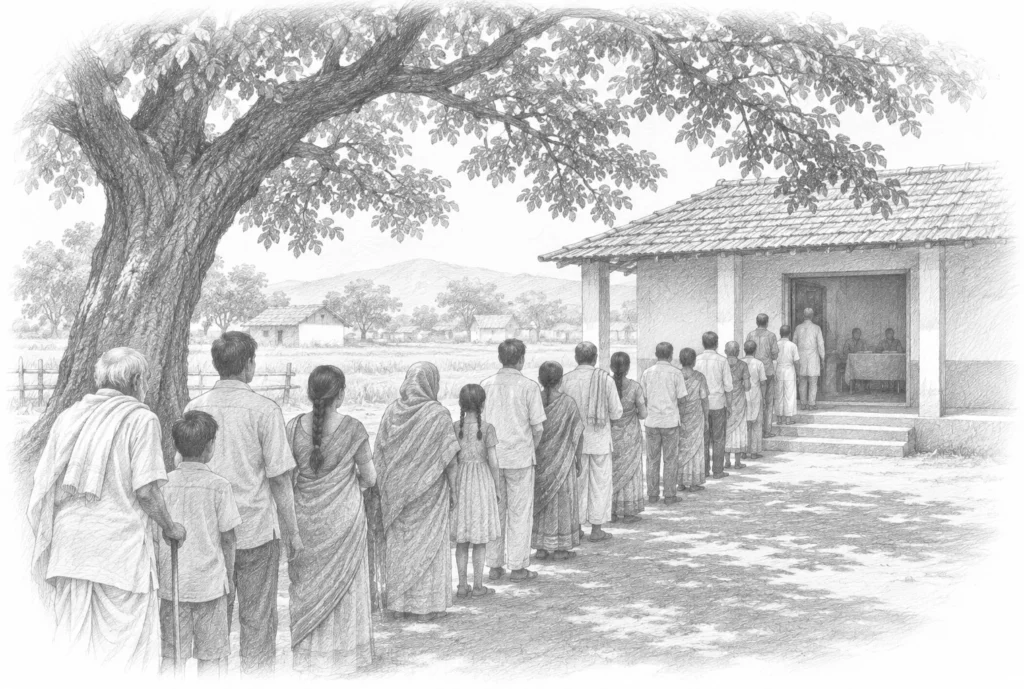
Ambedkar was critical of a nationalism that demanded freedom from British rule but ignored the freedom of the untouchables from caste rule. When Gandhi asked him in 1931 why he was critical of the Congress, he replied that he had no homeland: how could he call a land his own where his people were treated worse than cats and dogs and denied water to drink? For him, swaraj that left the caste order intact would mean the rule of the upper castes over the lower. He therefore insisted on safeguards for the depressed classes as a condition of any constitutional settlement.
- Not anti-national. Ambedkar declared his loyalty to India and said that the untouchables would defend its freedom, but he insisted that freedom must include social freedom.
- Nation in the making. He saw India as a nation in the making, which the Constitution could help build through equal rights and fraternity.
- Linguistic states. In Thoughts on Linguistic States (1955), he supported states based on language but warned against too many large states and proposed dividing Uttar Pradesh, Bihar and Madhya Pradesh to protect national unity.
- Hindu Raj. He warned that if Hindu Raj became a fact, it would be the greatest calamity for the country, since Hinduism was a menace to liberty, equality and fraternity.

Fraternity in the Preamble
Ambedkar’s concern with fraternity shaped the Constitution itself. When the Drafting Committee presented the Draft Constitution in February 1948, Ambedkar noted that it had added to the Preamble a clause on fraternity, because the need for fraternal feeling was greater in India than anywhere else. The Preamble promises fraternity assuring the dignity of the individual and the unity of the nation; the words and integrity were added by the 42nd Amendment in 1976. For Ambedkar, fraternity was another name for democracy, and the Preamble made it a constitutional goal.
4.2 Democracy and Its Conditions
Democracy as a Way of Life
Influenced by John Dewey, Ambedkar saw democracy as more than elections. It is a mode of associated living, a society in which people share experiences and respect each other as equals. In his 1952 lecture he defined democracy as a form and method of government by which revolutionary changes in the economic and social life of the people are brought about without bloodshed. This definition shows his twin commitment to radical change and peaceful, constitutional methods.
Conditions Precedent for the Successful Working of Democracy
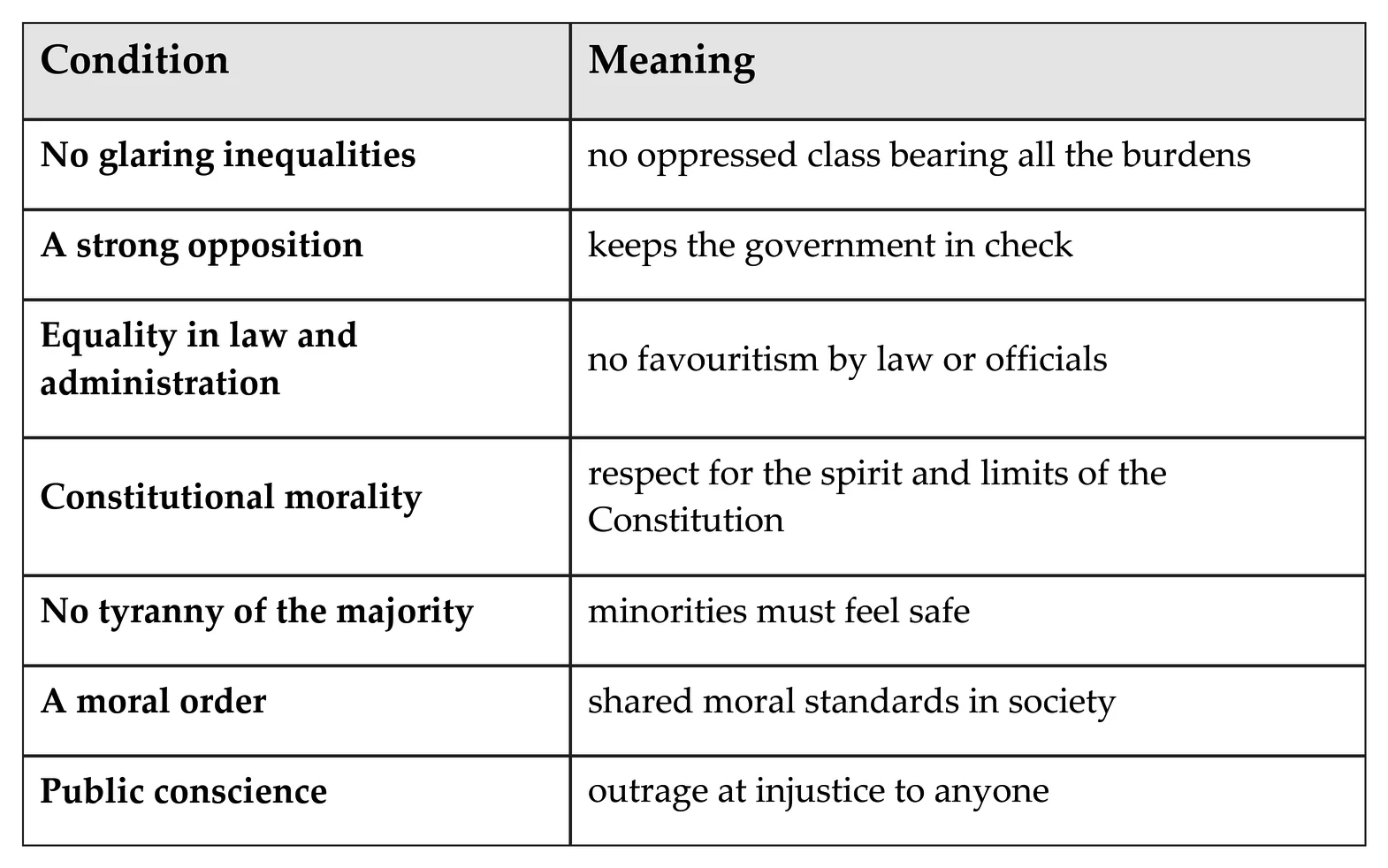
In his lecture at Pune in December 1952, Ambedkar listed the conditions that democracy needs in order to work:
- No glaring inequalities. There must be no oppressed class carrying all the burdens while another enjoys all the privileges, since such inequality contains the seeds of revolution.
- An opposition. Democracy needs a strong opposition, which keeps the government in check and gives people a choice.
- Equality in law and administration. All must be treated equally by the law and by the administration, without favour.
- Constitutional morality. Those who work the Constitution must respect its spirit, its limits and the rights of others.
- No tyranny of the majority. The majority must not oppress the minority, and the minority must feel safe.
- A moral order. Society must have a functioning moral order, without which democracy decays.
- Public conscience. There must be a public conscience that is roused by injustice to anyone, not only to one’s own group.
Three Warnings of 1949
In his final speech to the Constituent Assembly on 25 November 1949, Ambedkar warned against three dangers. First, Indians must abandon the bloody methods of revolution and the methods of civil disobedience, non-cooperation and satyagraha, which he called the grammar of anarchy, now that constitutional methods were available. Second, they must not lay their liberties at the feet of a great man through hero-worship, since bhakti in politics leads to degradation and dictatorship. Third, they must make political democracy a social democracy, recognising liberty, equality and fraternity as a union. On 26 January 1950, he said, India would enter a life of contradictions: equality in politics and inequality in social and economic life. If the contradiction was not removed soon, those who suffered inequality would blow up the structure of political democracy.
Ambedkar as Legislator and Administrator
- Labour Member (1942–46). He reduced working hours in factories from twelve to eight a day, promoted employment exchanges and supported maternity benefit for women workers.
- Law Minister (1947–51). He piloted the Hindu Code Bill and helped steer the Constitution through the Constituent Assembly.
- Elections. He lost the Lok Sabha election of 1952 from Bombay and a by-election in 1954, but served in the Rajya Sabha from 1952 until his death.
- Parliamentary debates. In the Rajya Sabha he spoke on linguistic states, the working of the Constitution and the rights of minorities.
4.3 Citizenship and the Critique of the Congress and Gandhi
Citizenship as Equal Membership
For Ambedkar, citizenship meant more than a legal status. It meant equal membership in the political community with the rights and dignity that go with it: the right to vote, to hold office, to use public places, to education and to work. Untouchables had been denied all of these. His evidence before the Southborough Committee (1919) argued that representation and the franchise were essential to make them citizens, and his later work aimed at securing equal citizenship through rights, representation and education.
What Congress and Gandhi Have Done to the Untouchables
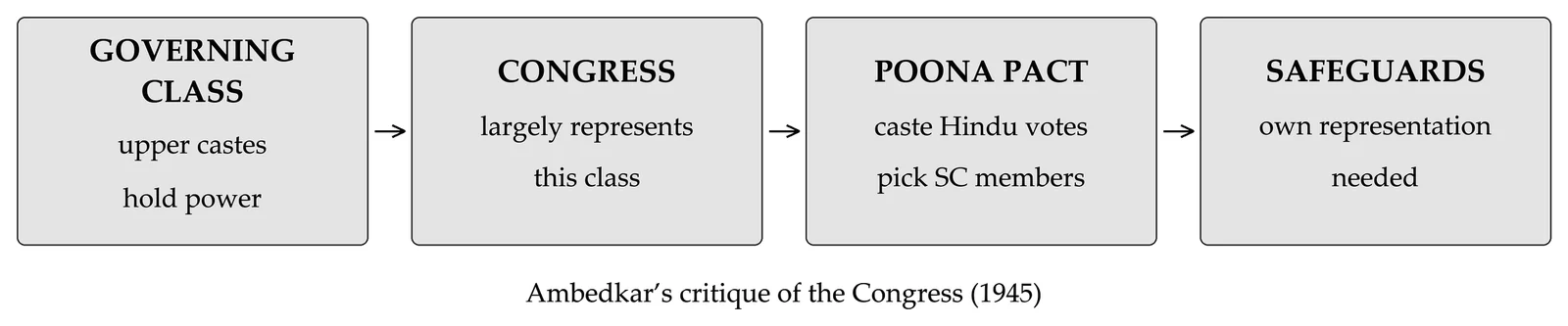
In What Congress and Gandhi Have Done to the Untouchables (1945), Ambedkar examined the Congress record. He argued that the Congress had passed resolutions against untouchability since 1917 but had done little in practice. He criticised the Poona Pact of 1932 because, under joint electorates, the untouchable candidates who won were those acceptable to caste Hindu voters, so the real representatives of the untouchables were defeated. He criticised the Harijan Sevak Sangh as a paternalist body run by caste Hindus, and Gandhi’s approach as one that sought to keep untouchables within Hinduism without destroying caste. Above all, he developed the idea of a governing class: in India, the Brahmins and Banias formed a governing class that controlled power, and the Congress, in his view, represented this class. Swaraj under its control would mean continued domination of the servile classes unless they had their own representation and safeguards.
- Gandhi’s view. Gandhi saw untouchability as a sin of caste Hindus to be removed by their own penance, and opposed separate electorates as dividing Hindu society.
- Ambedkar’s view. Ambedkar saw untouchability as a political problem of power, requiring rights, representation and organisation of the untouchables themselves.
- Ranade, Gandhi and Jinnah (1943). In this lecture he criticised hero-worship and praised Ranade as a social reformer who put social justice before political power.
- Political organisation. He founded the Independent Labour Party (1936), the Scheduled Castes Federation (1942) and planned the Republican Party of India, formed after his death in 1957.
Ambedkar’s Legacy in Democratic Politics
Ambedkar’s political vision inspired the Republican Party of India (1957), the Dalit Panthers (1972), and the Bahujan Samaj Party, founded by Kanshi Ram in 1984, which brought Mayawati to power in Uttar Pradesh in 1995 as India’s first Dalit woman Chief Minister. The Supreme Court has invoked his idea of constitutional morality in judgments such as Navtej Singh Johar (2018), which decriminalised homosexuality. His birthday, 14 April, is widely celebrated, and his ideas are cited across the political spectrum.
4.4 Important Questions
- Question 1 Discuss Ambedkar’s views on nation and nationalism.
- Question 2 Discuss Ambedkar’s views on democracy and the conditions for its success.
- Question 3 Examine Ambedkar’s critique of the Congress and Gandhi in What Congress and Gandhi Have Done to the Untouchables.
- Question 4 Discuss Ambedkar’s idea of citizenship and its relation to dignity and rights.
DU asks the same idea in different words. So learn one broad answer for each question below; the same answer works for every question joined by OR.
Important Question 1
Discuss Ambedkar’s views on nation and nationalism.
OR
Examine Ambedkar’s argument that caste prevents India from becoming a nation.
OR
Discuss Ambedkar’s idea of fraternity as the basis of nationhood.
Model Answer
“How can people divided into several thousands of castes be a nation?”
— B. R. Ambedkar, speech in the Constituent Assembly (25 November 1949)
Introduction. Ambedkar’s idea of the nation differed from that of most nationalist leaders. He saw the nation not as territory or culture but as a feeling of fraternity among equals. Since caste divides people into closed groups with no common feeling, he argued that India was not yet a nation. He criticised a nationalism that sought freedom from Britain but ignored freedom from caste.
1. Nation as a Spiritual Principle
Following Renan, Ambedkar saw a nation as a spiritual principle based on shared memories and a will to live together. Territory and government alone do not make a nation.
2. Fraternity as the Essence
For Ambedkar, the essence of nationhood is fraternity, a sense of common brotherhood. Without it, people may share land but not a common life.
3. Hindu Society Not a Society
In Annihilation of Caste he argued that Hindu society is only a collection of castes. Each caste is conscious only of itself.
4. Castes as Anti-National
He called castes anti-national because they create jealousy and hostility between groups. They block the growth of common feeling.
5. The Great Delusion
In 1949 he warned that believing India was already a nation was a great delusion. A people divided into thousands of castes could not be a nation.
6. A Nation in the Making
He saw India as a nation in the making. The Constitution, by giving equal rights, could help build fraternity.
7. I Have No Homeland
In 1931 he told Gandhi that he had no homeland, since his people were treated worse than animals. This expressed the alienation of the untouchables.
8. Critique of Upper-Caste Nationalism
He argued that nationalism which ignored caste would only replace British rule with upper-caste rule. Freedom must include social freedom.
9. Safeguards
He insisted on safeguards for the depressed classes in any constitutional settlement. Without them, swaraj would not be theirs.
10. Loyalty to India
Ambedkar was not anti-national; he declared his loyalty to India. He wanted a nation that included everyone as equals.
11. Renan and Pakistan
He used the same idea of nationhood as feeling to analyse the Muslim demand for Pakistan. If people felt themselves a nation, that feeling mattered.
12. Warning against Hindu Raj
He warned that Hindu Raj would be a calamity, since it would threaten liberty, equality and fraternity. He feared majority domination.
13. Linguistic States
In 1955 he supported linguistic states but proposed dividing large states to protect unity. He balanced diversity with national cohesion.
14. Constitutional Nationalism
His idea of the nation rested on the Constitution and equal citizenship rather than religion or culture. This is sometimes called constitutional patriotism.
15. Relevance
His view challenges any nationalism that excludes or subordinates groups. It remains central to debates on Indian nationhood.
16. Criticism
Critics say he underestimated the unity created by the freedom struggle. Supporters reply that he exposed the limits of that unity.
17. Nation and Minorities
For Ambedkar, a nation that oppressed its minorities could not be a true nation, so protecting minorities was part of nation-building, not a threat to it.
18. Evaluation
Ambedkar’s idea of the nation as fraternity among equals is a democratic and inclusive vision of nationhood.
Conclusion. Thus, Ambedkar asked how people divided into thousands of castes could be a nation. He saw the nation as fraternity among equals and argued that India would become a true nation only by ending caste and building a common life.
Important Question 2
Discuss Ambedkar’s views on democracy and the conditions for its success.
OR
Examine Ambedkar’s idea of social democracy.
OR
Discuss the conditions precedent for the successful working of democracy according to Ambedkar.
Model Answer
“Democracy is a form and a method of government whereby revolutionary changes in the economic and social life of the people are brought about without bloodshed.”
— B. R. Ambedkar, Conditions Precedent for the Successful Working of Democracy (1952)
Introduction. Ambedkar was a committed democrat, but he saw democracy as much more than elections. Influenced by Dewey, he understood it as a way of life based on equality and fraternity. He defined it as a method of peaceful revolutionary change and set out the social and moral conditions it requires. He warned that political democracy cannot last without social democracy.
1. Democracy as Associated Living
Following Dewey, Ambedkar saw democracy as a mode of associated living. People share experiences and respect each other as equals.
2. Peaceful Revolution
He defined democracy as a method of bringing revolutionary social and economic change without bloodshed. It combines radical goals with peaceful means.
3. No Glaring Inequalities
Democracy needs a society without an oppressed class bearing all burdens. Glaring inequality contains the seeds of revolution.
4. An Opposition
A strong opposition checks the government and gives people a choice. Without it, democracy becomes the rule of one party.
5. Equality in Law and Administration
All must be treated equally by the law and by officials. Favouritism in administration destroys trust in democracy.
6. Constitutional Morality
Those in power must respect the spirit and limits of the Constitution. Ambedkar said constitutional morality is not natural and must be cultivated.
7. No Tyranny of the Majority
The majority must not oppress minorities, who must feel safe. This was especially important in a society with a communal majority.
8. A Moral Order
Society must have a functioning moral order. Without shared moral standards, democracy decays into mere power.
9. Public Conscience
There must be a public conscience roused by injustice to anyone. Indifference to the suffering of others is fatal to democracy.
10. Social Democracy
Social democracy means a way of life that recognises liberty, equality and fraternity as a union. Political democracy must rest on it.
11. The Life of Contradictions
In 1949 he warned that India would have equality in politics and inequality in society. This contradiction had to be removed quickly.
12. Grammar of Anarchy
He urged abandoning satyagraha and civil disobedience once constitutional methods were available. He called them the grammar of anarchy.
13. Against Hero-Worship
He warned that bhakti in politics leads to dictatorship. Citizens must not surrender their liberties to great men.
14. Parliamentary Democracy
He preferred parliamentary democracy for its daily accountability of the executive to the legislature. But he warned that it would fail if social and economic inequality persisted.
15. Buddhism and Democracy
He believed Buddhism provided the moral basis of democracy through its teaching of fraternity. Religion and democracy were linked in his thought.
16. Criticism
Critics argue that his conditions are demanding and that few democracies meet them fully. But they serve as standards to aim for.
17. Democracy and Economic Equality
He argued that political democracy based on one person, one vote must be extended to economic democracy, one person, one value, or it would be undermined.
18. Relevance Today
Debates on the independence of institutions, the role of the opposition and majoritarianism show the continuing relevance of his conditions.
19. Evaluation
Ambedkar’s idea of democracy is among the richest in modern Indian thought, linking politics with social justice and morality.
Conclusion. Thus, Ambedkar defined democracy as a method of bringing revolutionary changes without bloodshed, resting on social democracy, constitutional morality and public conscience. His warning that political democracy cannot last without social democracy remains highly relevant.
Important Question 3
Examine Ambedkar’s critique of the Congress and Gandhi in What Congress and Gandhi Have Done to the Untouchables.
OR
Explain Ambedkar’s idea of the governing class.
OR
Discuss the debate between Ambedkar and Gandhi on the representation of the untouchables.
Model Answer
“I would far rather that Hinduism died than that untouchability lived.”
— M. K. Gandhi, Second Round Table Conference (13 November 1931)
Introduction. In What Congress and Gandhi Have Done to the Untouchables (1945), Ambedkar gave a detailed critique of the Congress and Gandhi. He argued that their opposition to untouchability was mostly rhetorical, that the Poona Pact deprived the untouchables of genuine representatives, and that the Congress represented a governing class of upper castes. The debate shows two different approaches to the problem of untouchability.
1. Context
By 1945, independence was approaching and the question of minority safeguards was urgent. Ambedkar wrote to warn the world about the position of the untouchables.
2. Congress Resolutions
He noted that the Congress had passed resolutions against untouchability since 1917. But he argued that it had done little to change practice.
3. Gandhi’s Approach
Gandhi treated untouchability as a sin of caste Hindus, to be removed by their penance. He declared that he would rather Hinduism died than untouchability lived.
4. Ambedkar’s Approach
Ambedkar saw untouchability as a political problem of power. He demanded rights, representation and self-organisation for the untouchables.
5. Separate Electorates
At the Round Table Conferences, Ambedkar demanded separate electorates for the depressed classes. The Communal Award of 1932 granted them.
6. Gandhi’s Fast
Gandhi began a fast unto death against separate electorates in September 1932. Under great pressure, Ambedkar agreed to the Poona Pact.
7. The Poona Pact
The Pact gave more reserved seats but in joint electorates. Ambedkar later argued that this let caste Hindu voters choose the untouchable representatives.
8. Puppet Representatives
He claimed that Congress-backed untouchable members were tools of the caste Hindus. The genuine leaders of the untouchables were often defeated.
9. Harijan Sevak Sangh
He criticised the Sangh as paternalist and run by caste Hindus. It treated untouchables as objects of charity, not as citizens.
10. The Governing Class
He argued that Brahmins and Banias formed a governing class controlling power and the professions. The Congress largely represented this class.
11. Swaraj and the Servile Classes
Swaraj under the governing class would mean continued domination of the servile classes. Safeguards were therefore essential.
12. Gandhi and Varna
Gandhi defended varna while opposing untouchability. Ambedkar argued that varna inevitably produced caste and untouchability.
13. Political Organisation
Ambedkar built independent parties such as the ILP and the Scheduled Castes Federation. He wanted the untouchables to speak for themselves.
14. Ranade, Gandhi and Jinnah
In 1943 he criticised hero-worship of political leaders and praised Ranade’s social reform. He valued social justice above political power.
15. Gandhi’s Contribution
Many historians credit Gandhi with making untouchability a national issue and changing caste Hindu attitudes. Ambedkar acknowledged this but found it insufficient.
16. Criticism of Ambedkar
Critics argue that he was too harsh on Gandhi and that the Poona Pact gave more seats. Supporters reply that seats without autonomy meant little.
17. The 1937 Elections
In the provincial elections of 1937, Ambedkar’s Independent Labour Party won most of the reserved seats it contested in Bombay, showing his independent support.
18. Later Reconciliation
Despite his criticism, Ambedkar accepted Nehru’s invitation to join the first cabinet and chair the Drafting Committee, showing his pragmatism.
19. Evaluation
The debate reveals a choice between reform from above and empowerment from below, a choice still central to Indian politics.
Conclusion. Thus, while Gandhi declared he would rather Hinduism died than untouchability lived, Ambedkar argued that the Congress and Gandhi left the caste order and the governing class intact. His demand for genuine representation and self-organisation shaped Dalit politics after him.
Important Question 4
Discuss Ambedkar’s idea of citizenship and its relation to dignity and rights.
OR
Examine the significance of Ambedkar’s statement that he had no homeland.
OR
Discuss Ambedkar’s view of the relationship between citizenship, fraternity and representation.
Model Answer
“How can I call this land my own homeland and this religion my own wherein we are treated worse than cats and dogs, wherein we cannot get water to drink?”
— B. R. Ambedkar to Gandhi (14 August 1931), as recorded by Dhananjay Keer
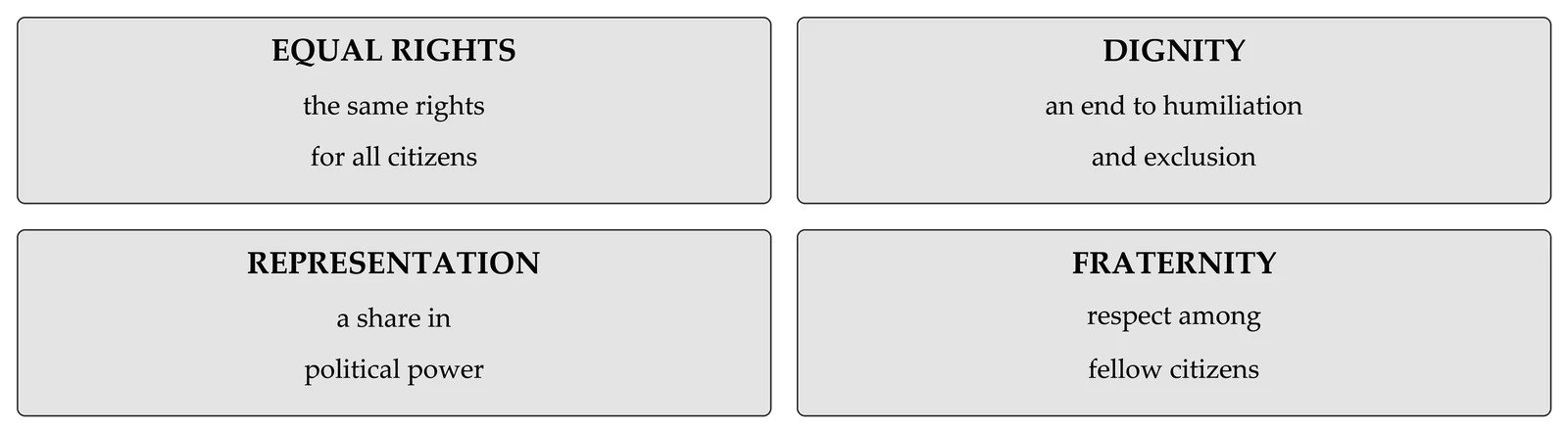
Introduction. For Ambedkar, citizenship meant equal membership in the political community, with rights, dignity and a share in power. The untouchables had been denied all of these, which is why he said in 1931 that he had no homeland. His work, from his evidence before the Southborough Committee to the Constitution, aimed at making the excluded into equal citizens.
1. Citizenship as Membership
Ambedkar saw citizenship as equal membership in the political community. It is not only a legal status but a relationship of equality.
2. Denial to Untouchables
Untouchables were denied access to wells, schools, temples and public roads. They were not treated as full members of society.
3. I Have No Homeland
In 1931 he told Gandhi that he had no homeland, since his people were treated worse than cats and dogs. The statement expressed the denial of citizenship.
4. Southborough Evidence
In 1919 he argued before the Southborough Committee that franchise and representation were essential for untouchables. Without them they could not be citizens.
5. Rights as Foundation
He saw fundamental rights as the foundation of citizenship. Rights must be guaranteed by the Constitution and enforced by courts.
6. Representation
Citizenship required a share in power, so he demanded representation for the depressed classes. Being governed by others was not citizenship.
7. Dignity
For Ambedkar, dignity was at the heart of citizenship. The Mahad satyagraha asserted the dignity of untouchables as equal human beings.
8. Education
He saw education as essential for active citizenship. Educated citizens could claim their rights and take part in public life.
9. Fraternity
Citizenship needs fraternity, respect among citizens. Without it, legal equality remains hollow.
10. Constitutional Citizenship
The Constitution gave equal citizenship, universal franchise and abolished untouchability. Ambedkar turned his ideas into law.
11. Special Provisions
Reservations and special provisions were meant to make equal citizenship real for those historically excluded. They were tools of substantive equality.
12. Social and Economic Rights
He argued that citizenship must include economic security, as he proposed in States and Minorities. Poverty limits the exercise of rights.
13. Active Citizenship
His call to educate, agitate and organise asked the excluded to become active citizens. Citizenship had to be claimed, not given.
14. Citizenship and Religion
He saw conversion as a way to claim a dignified identity outside the caste order. Religious freedom was part of citizenship.
15. Relevance
Continuing caste discrimination shows that equal citizenship remains incomplete. His ideas guide struggles for dignity today.
16. Criticism
Some argue that group-based safeguards may conflict with individual citizenship. Ambedkar saw them as necessary to make individual equality real.
17. Citizenship and Public Space
Access to public wells, roads, schools and temples was central to citizenship, which is why Article 15(2) forbids denial of access to public places on grounds of caste.
18. Citizenship as Struggle
For Ambedkar, citizenship was not a gift from the state but a status to be won through organised struggle by the excluded themselves.
19. Evaluation
Ambedkar’s idea of citizenship joins rights, dignity, representation and fraternity into a demanding democratic ideal.
Conclusion. Thus, Ambedkar’s statement that he could not call a land his own where his people were treated worse than animals reveals the denial of citizenship to the untouchables. His life’s work aimed to make them equal citizens with rights, dignity and a share in power.
Short Notes
(a) Constitutional morality
Respect for the spirit, limits and procedures of the Constitution by those who work it; Ambedkar said it is not a natural sentiment and must be cultivated.
(b) Grammar of anarchy
Ambedkar’s description, in 1949, of methods such as civil disobedience and satyagraha, which he said should be abandoned once constitutional methods were available.
(c) Governing class
Ambedkar’s term for the upper castes, especially Brahmins and Banias, who in his view controlled power and whom the Congress largely represented.
More notes: MDSE-3b Understanding Ambedkar
These notes are prepared by PADHO TO AISE for study help. They are not an official University of Delhi publication.